Full Welding Ball Valve
Why Choose Us
Our Certificate
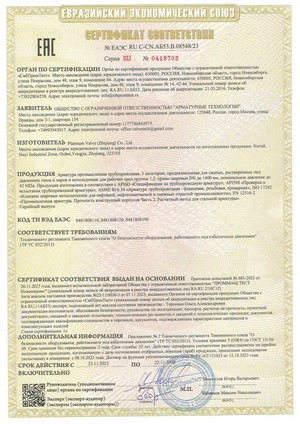
ISO9001,API6D, CE,TR CU 032 and TR CU 01
Our services
Order tracking: We will establish a sound order tracking system, timely update the status of customer orders, to ensure that customers can understand in time Order progress.After-sales protection: Provide perfect after-sales protection.
Solution Customization
According to The Specific Needs of Customers, We Will Provide Personalized Solution Customization Services to Meet The Specific Needs of Customers.
Professional team
We Will Provide a Professional Technical Support Team to Solve Technical Problems Encountered In The Process of Product Selection and Use
What is Full Welding Ball Valve
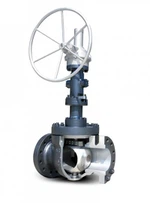
A fully welded valve is designed with a fully welded and forged body to reduce weight and increase strength while eliminating several potential leak points. They are used to connect and shut off the flow of the medium in many different pipeline systems. Fully welded ball valves are often considered the most common type of full weld valve found in many industries such as offshore petroleum, onshore petrochemical, urban heating & natural gas, shipbuilding, and power plants.


Benefits of Full Welding Ball Valve
Enhanced sealing performance
Fully welded ball valves feature a welded structure, eliminating the need for sealing gaskets or packing materials found in traditional ball valves. As a result, they offer stronger sealing capabilities, effectively preventing leaks.
Increased pressure resistance
With the adoption of a fully welded structure, fully welded ball valves do not feature threaded connections or sealing gaskets between the valve body and bonnet. Consequently, they can withstand higher pressures, offering superior pressure resistance.
Extended service life
The structure of fully welded ball valves is simpler, without any moving parts or vulnerable components, resulting in a longer service life without the need for frequent part replacements.
Suitable for high temperature, high pressure, and corrosive media
Fully welded ball valves are typically manufactured using materials that are resistant to high temperatures and corrosion. They can adapt to various harsh operating environments, such as high temperature, high pressure, and corrosive media.
Compact structure
Fully welded ball valves feature a simple design with a compact size, making them easy to install and occupying minimal space.
Types of Full Welding Ball Valve

Cryogenic Full Welded Ball Valve
Cryogenic ball valves are manufactured for extremely low temperature and cryogenic applications. Valves are designed with an integral bonnet extension which prevents cryogenic liquids from reaching the stem packing by enabling the liquids to boil and convert to gas. This minimizes the energy loss along the extension and protects the valve from malfunctioning. The structural integrity of the valve reduces any thermal deformation of internal components caused by temperature variance to a minimum, ensuring the highest level of performance for tight shut-off in critical LNG fields.
High Temperature Full Welded Ball Valve
High Temperature Full Welded Ball Valve offers a complete range of fully welded two or three-piece side-entry ball valves. The fully welded body construction provides a lighter solution while also avoiding potential leak paths to the external environment, ensuring reliable protection of the whole system. A solid double trunnion configuration and two independent seats with bidirectional sealing ensure the greatest level of tightness and reliability under high pressure and temperature conditions in all critical isolation services. Several unique features are available offering advanced technical solutions suitable for sweet or acid gas processes or pipelines applications. Material selection is fully customizable to meet customers project specifications.

Application of Full Welding Ball Valve
Petrochemical industry
Mainly used in raw material transportation, product separation and refining in the production process of oil, natural gas, oil refining and chemical industry. With its excellent sealing performance and reliability, ball valves ensure safe and efficient transmission of fluids in these industries.
Water conservancy, water supply and drainage system
Full welding ball valve are used to regulate and cut off water flow in urban water supply, drainage, water supply and drainage treatment and other facilities. Ball valves have strong adaptability to media and are simple to operate, so they have broad application prospects in water conservancy projects.
Electric power industry
Full welding ball valve are widely used in thermal power generation, nuclear power and other fields, such as thermal power plant boilers, steam turbines and various thermal pipeline systems to achieve precise control and safe blocking.
Food and pharmaceutical industry
In food and pharmaceutical fields, hygiene and cleanliness are crucial. Full welding ball valve no-dead-angle design and good materials enable it to meet strict hygiene standards. In addition, full welding ball valve ensure precise regulation and control of various food, beverage and pharmaceutical raw materials during production process.
Refrigeration and air conditioning system
Due to its superior sealing performance and high pressure withstand capability, full welding ball valve can effectively control the flow of refrigerant, thereby improving the operating efficiency and stability of the system.
Ship and marine engineering
Full welding ball valve can withstand high pressure and resist corrosion in fields such as ship power systems, ship auxiliary systems, and offshore oil and gas exploration, ensuring reliable transmission of media.
Material of Full Welding Ball Valve
Brass
Brass is a popular material for ball valves, especially in applications where corrosion resistance is important. Brass ball valves are commonly used in water and air systems.
Stainless Steel
Stainless steel is known for its corrosion resistance and durability. Stainless steel ball valves are suitable for a wide range of applications, including chemical processing, oil and gas, and industrial processes.
Bronze
Bronze is an alloy of copper and tin, and it offers good corrosion resistance. Bronze ball valves are often used in marine and seawater applications.
Carbon Steel
Carbon steel ball valves are robust and suitable for high-pressure and high-temperature applications. They are commonly used in industrial processes, oil and gas pipelines, and power plants.
PVC (Polyvinyl Chloride)
PVC ball valves are suitable for applications involving water and certain chemicals. They are often used in plumbing systems and water treatment.
CPVC (Chlorinated Polyvinyl Chloride)
CPVC is a thermoplastic that offers enhanced chemical resistance compared to PVC. CPVC ball valves are used in applications where higher temperatures are involved.
Features of Full Welding Ball Valve
Fully Welded Structure
The body of the fully welded ball valve is welded to the pipeline, eliminating potential leak points and enhancing the valve's sealing and reliability. This structure makes it particularly suitable for high-pressure and high-temperature operating environments.
High Corrosion Resistance
Fully welded ball valves are typically made from high-quality stainless steel or alloy steel, offering excellent corrosion resistance. They can be used long-term in corrosive media such as acids, alkalis, and salts.
Long Service Life
Due to its compact structure, the fully welded ball valve uses special material sealing rings between the ball and the seat, reducing wear and corrosion, thus extending its service life. Under normal conditions, the service life of a fully welded ball valve can exceed 20 years.
Easy Maintenance
The compact design of fully welded ball valves requires minimal maintenance. Even when maintenance is necessary, only the stem part needs to be inspected and replaced, reducing downtime and maintenance costs.
Wide Range of Applications
Fully welded ball valves are suitable for various conditions ranging from low to high temperatures and from low to high pressures. Their excellent performance makes them widely used in industries such as urban gas, thermal power, chemical, and metallurgy.
Easy Operation
Fully welded ball valves can be operated manually, electrically, or pneumatically, offering flexible operation to meet different automation control needs.
How to Choose Full Welding Ball Valve
Generally in plastics; UPVC ball valves are to be used with UPVC pipelines, polypropylene valves are to be used with polypropylene pipelines, and so on. Different plastic piping materials have very different working temperature ranges and very different chemical resistance profiles. The decision of which material to use for your pipeline should be one of the primary considerations, so you should already know the material of your pipeline before considering ball valves.
The seals in a ball valve are made from a 'rubber like' material that can be compressed between rigid separable components, to keep the piped media from leaking out from between the components. There are two main materials used for ball valve seals. The 'standard' seal material in many plastic ball valves is EPDM (Ethylene Propylene Diene Monomer) which is perfectly suitable for water and many other commonly piped media. The second material is FPM (FKM), which has completely different resistance profile to EPDM. FPM is usually found more in industrial applications as aggressive medias can attack the seal material and cause seals to fail; If piping any media other than water, you may want to check compatibility.
You may see an economy valve with the exact same body material and seal material as an industrial valve from the same brand, so what's the difference? All ball valves are all designed to operate in the same way, but are not of the same material quality and standard of manufacture. Across our product range, you'll notice economy ball valves generally have a blue handle, signifying that they are mainly for use with water and the industrial counterpart is either orange or red handled.
There are two separate pressure piping systems in the UK. Imperial & Metric, they are not interchangeable. It is not a simple case of converting millimetres to inches as one may think. This is a whole subject in itself and will need more explanation, but for the purpose of this article we'll keep it brief. If using metric pipe, only ball valves that are designated as metric will connect directly to metric pipe and the same goes with imperial counterparts. Convertors and adaptors are available to allow the imperial components to connect to metric components, but this may confuse matters when repairs are required in the future.
How to Maintain Full Welding Ball Valve
Selection basis
When selecting a fully welded ball valve, you need to consider the properties of the fluid (such as corrosiveness, temperature, pressure, etc.), system requirements (such as sealing, flow control, etc.) and the environmental conditions of the application (such as indoor or outdoor, whether exposed to extreme weather, etc.). These factors will affect valve selection and performance.
Quality Assurance
When purchasing fully welded ball valves, be sure to choose manufacturers and suppliers with quality assurance. Review relevant quality certifications and product test reports to ensure the valve complies with relevant standards and specifications.


Proper installation
The installation of fully welded ball valves should follow the installation guidelines provided by the manufacturer. Make sure the valve is installed in the correct location and orientation to avoid any conditions that could cause stress concentrations or leaks. During installation, use appropriate tools and materials to ensure welding quality and tightness, butterfly valve company.
Maintenance and overhaul
Regular inspection and maintenance of all-welded ball valves is the key to ensuring their long-term stable operation. This includes regular inspections of the valve’s tightness, operating flexibility and any possible signs of leakage or corrosion. If any problems are found, repair or replace them promptly.
Our Factory
Workshop is in Oubei-Zhejiang, our company covers a land area of 6000㎡ and introduces world's advanced valve machining and manufacturing equipment. Our company has a perfect enterprise standardization management system and adopts world's advanced precision casting technology and modern electronic inspection systems. The internationally advanced management mode is applied during the whole production process from material selection till delivery of finished products, so that specialized, automatic, standardized and programmed production is realized. Taking technological innovation as the guide for enterprise development, our company has established the CAD valve design center, three-dimensional analog manufacturing and design system, valve inspection center and testing platform to optimize product structures and ensure the quality and speed of research, development and production of new products.


Certificate