


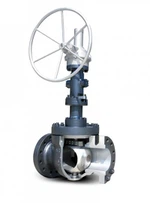
Floating Ball Valve
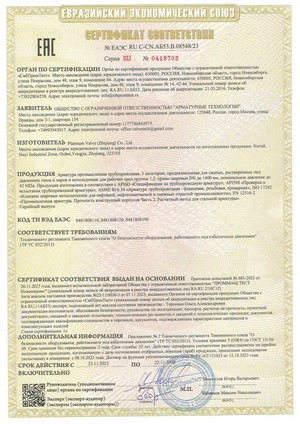
Our Certificate
ISO9001,API6D, CE,TR CU 032 and TR CU 01.
Our services
Order tracking: We will establish a sound order tracking system, timely update the status of customer orders, to ensure that customers can understand in time Order progress.After-sales protection: Provide perfect after-sales protection.
Solution Customization
According to The Specific Needs of Customers, We Will Provide Personalized Solution Customization Services to Meet The Specific Needs of Customers.
Professional team
We Will Provide a Professional Technical Support Team to Solve Technical Problems Encountered In The Process of Product Selection and Use
What is Floating Ball Valve
A floating ball valve is a type of quarter-turn ball valve where the spherical body of the valve, which contains the bore through which the fluid passes, is not rigidly fixed to the valve stem. Instead, it is allowed to float freely within the housing. A floating ball provides impenetrable sealing when pushed onto its seats. It responds fast to shutting off or allowing fluid flow. It is very efficient in small scale applications for which other valves would be unsuitable due to size. It operates at high torque.


Benefits of Floating Ball Valve
Sealing Pressure
As the ball valve operates and the flow of fluid causes the ball to rotate 90 degrees, the seating surfaces (the ball and the seats) come into contact under the influence of the fluid pressure. This means that the sealing force increases with the operating pressure, potentially leading to tighter seals and improved shutoff capabilities.
Self-Alignment
Due to its floating nature, the ball is able to align itself with the flow path, which can enhance the valve's ability to seal tightly. This self-alignment also reduces wear on the seating surfaces, extending the service life of the valve.
Bubble-Tight Shutoff
In many cases, floating ball valves are capable of providing bubble-tight shutoff even with relatively low torque requirements. This makes them suitable for applications where leakage must be minimized.
Compact Design
The simplicity of the floating ball design often results in a compact and lightweight valve, which can be advantageous in space-constrained applications.
Cost-Effectiveness
Floating ball valves are generally less expensive than other types of ball valves because of their simpler construction. This makes them an economical choice for many applications.
Types of Floating Ball Valve
Full Bore Floating Ball Valves
Full bore floating ball valves feature a bore size that matches the diameter of the pipeline the valve is connected to. These valves allow the flow of medium without any restrictions and are suitable for liquid and gaseous mediums. In full bore floating valves, the onstream pressure from the pipeline affects the entire surface area of the ball, pushing it against the downstream seat more effectively. Full bore floating ball valves provide tighter seals than any other kind of ball valve.
One-piece floating ball valve
One-piece ball valve and flange gate valve belong to the same type of valve, being the closing member the main difference between them. Obviously, the one-piece ball valve uses a sphere in which rotates around the center line of the body, while the flange gate valve opens a type of gate by lifting the blocking structure when the handle is rotated. The ball valve is mainly used in the pipeline to cut off, distribute and change the flow direction of the medium. Also known as integral ball valve, it is a new type of valve which has been widely used in recent years.


Two-piece floating ball valve
The two-piece floating ball valve takes its name from the fact that it is made of two parts called the left and the right body which are connected to each other through threads and bolts or by welding them. This type of valve is suitable for different working conditions such as high temperature and high pressure.
Three-piece floating ball valve
The three-piece floating ball valve refers to a floating ball valve whose body is composed of three parts from left to right. The parts are usually a body and two bonnet. Similar to the case of two-piece floating ball valves, the end caps are usually connected through threads and bolts, by welding them or flanged to the pipe.
Application of Floating Ball Valve
Chemical manufacturing plants
The transmission of chemicals through pipelines during production requires stringent management. More so where corrosive chemicals are involved because leakages and high reactive temperatures could harm staff or the surrounding environment. The full-proof sealing added to trunnion ball valves during manufacturing and their high-temperature resilience makes them ideal for the safe management of such fluids.
Petroleum industry applications
Trunnion ball valves manufactured to API 6D standards are recommended for petrochemical industry applications because they are leak-proof and can handle high pressure. These features are especially useful in high-volume petrochemical pipelines and gas lines which require careful pressure management.
Power generation
Power is generated using different fuels. Geothermal power, for example, is generated using steam while hydropower relies on water. In each case, the medium used to generate power needs to be released into the system in measured units. A trunnion ball valve is suitable for controlling the flow of such media as It can keep up with the large-scale, high temperatures, and high-pressure nature of such operations.
Emergency shut-off systems
Pipeline systems such as those involving fuels, water, or critical gases often require a fast-responding shut-off valve in case of emergencies. Given as this type of ball valve is unmounted, it works fast and is therefore suitable for SIL 3 emergency shut-offs.
Water systems
Water distribution systems require that pressure is maintained at optimum levels to sustain flow and prevent air pockets from restricting the flow of water. The flow of water also needs to be controlled to prevent overflows. A floating ball valve would be a good choice for water system control as it is pressure-sensitive and can open and shut as needed based on pressure conditions.
Pipeline pressure relief
Pipeline pressure management is essential to avoid busts and similar mishaps. A floating ball valve can be added in a pipeline as a pressure outlet valve as it takes on the pressure while remaining intact as opposed to a mounted ball valve that could sometimes blow out.
Power Source
The stem of the ball valve is rotated using manual or actuated power sources. Manual actuation includes levers and handles that are controlled by an operator. Automated power sources like electric, pneumatic and hydraulic actuation are also available.
Valve Body
This is the main part of the valve and contains all of the components for on/off control.
Packing
This is a seal around the stem that prevents the media from escaping.
Bonnet
Thousands of happy clients,hundreds of permanent customers are the result of our work.
Rotary Ball
The ball is designed with a center bore (hole) that the media flows through. The direction of the ball is controlled by turning the stem.
Stem
This connects the ball to the external control mechanism. For example, in a manual ball valve the stem is connected to a handle or lever.
Seats
These are discs that lie in between the body and the ball. Seats provide a seal between the two and also support the ball.
How to Choose Floating Ball Valve
Select a valve with a diameter that matches the pipe size to ensure proper flow and fit within the system.Determine the maximum working pressure of your system and choose a valve with a higher pressure rating to ensure safety and reliability.The valve material must be capable of withstanding the highest temperature anticipated in your process. Check the valve's temperature rating to ensure compatibility.
The valve material must be capable of withstanding the highest temperature anticipated in your process. Check the valve's temperature rating to ensure compatibility.Consider the chemical compatibility of the valve materials with the fluid being handled. Common materials include stainless steel, carbon steel, brass, PVC, and PTFE-coated metals.
Depending on the application, you might require additional safety features like emergency shutdown (ESD) capabilities, blowout prevention, or indication of the valve position (position indicators or limit switches).Choose a reputable manufacturer with a track record of quality and reliable customer support.
Decide whether the valve will be operated manually or automatically (using electric, pneumatic, or hydraulic actuators). This will impact the choice of valve design and additional components. Evaluate the required torque to operate the valve and choose a model that matches the capabilities of your actuator or manual operator.
Consider the ease of maintenance and service for the valve. Some designs allow for quick replacement of seats and O-rings without disassembling the entire valve.Check if the valve has the necessary certifications (e.g., ISO, ASME, API, etc.) and adheres to industry standards for your specific application.
Process of Floating Ball Valve
Construction
A floating ball valve has a hollow valve body with inlet and outlet ports, a spherical ball, a stem, and a lever to control the position of the ball.
Ball Design
The ball inside the valve has a central hole (or bore), allowing fluid flow when open. This ball is typically made of metal, such as stainless steel, or other materials chosen for compatibility with the specific fluid being controlled.
Operation
When closed, fluid pressure pushes the ball against the valve seat, creating a tight seal. To open the valve, the ball rotates 90 degrees (a quarter-turn). This aligns the hole in the ball with the flow path, allowing fluid to flow through.
Floating Design
Unlike a trunnion-mounted ball valve, where the ball is fixed in place by a top stem and bottom trunnion, a floating ball valve's ball is connected only to a top stem. This allows it to “float” within the valve seats, held in place by fluid pressure when the valve is closed.
Regular Inspection
Perform visual inspections regularly to check for any signs of damage, leaks, or corrosion. Pay special attention to the body, bonnet, stem, and seat areas.
Cleaning
Keep the valve clean, both externally and internally. External cleaning can be done with a cloth and mild detergent. For internal cleaning, shut down the system, remove the valve if possible, and gently brush away any accumulated debris.
Lubrication
Apply an appropriate lubricant to the stem area to reduce friction and prevent sticking. Use a grease gun to introduce lubricant through the stuffing box, if applicable. Ensure the lubricant is compatible with the service conditions, especially the fluid temperature.
Sealing Element Replacement
The sealing elements, such as O-rings and seats, are subject to wear and tear. Inspect these components periodically and replace them as needed to maintain tight shutoff and prevent leaks.
Actuator Maintenance
If the valve is automated, check the actuator according to the manufacturer's recommendations. This includes checking the power source, control signals, and mechanical linkages.
Pressure Testing
Conduct pressure tests to ensure the integrity of the valve and its ability to withstand the system's working pressure. Look for leaks around the body and bonnet connections.Periodically test the valve's function by opening and closing it several times to ensure smooth operation. Listen for any unusual sounds that could indicate internal issues.
Storage
When not in use, store the valve in a dry, clean environment to protect it from dirt, moisture, and corrosive substances.Protect the valve from corrosion by using coatings or inhibitors, especially in aggressive environments. Regularly inspect and replace any sacrificial anodes if the valve is made from materials susceptible to galvanic corrosion.
Our Factory
Workshop is in Oubei-Zhejiang, our company covers a land area of 6000㎡ and introduces world's advanced valve machining and manufacturing equipment. Our company has a perfect enterprise standardization management system and adopts world's advanced precision casting technology and modern electronic inspection systems. The internationally advanced management mode is applied during the whole production process from material selection till delivery of finished products, so that specialized, automatic, standardized and programmed production is realized. Taking technological innovation as the guide for enterprise development, our company has established the CAD valve design center, three-dimensional analog manufacturing and design system, valve inspection center and testing platform to optimize product structures and ensure the quality and speed of research, development and production of new products.


Certificate


FAQ