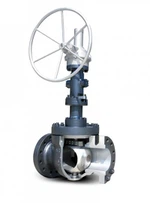
Fully Welded Side-Entry Trunnion Ball Valve
Why Choose Us
Our Certificate
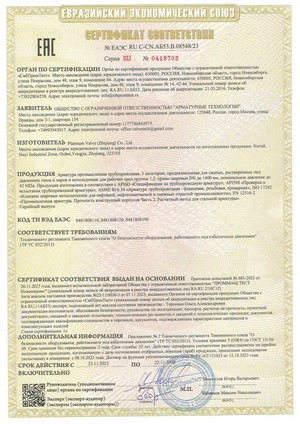
ISO9001,API6D, CE,TR CU 032 and TR CU 01
Our services
Order tracking: We will establish a sound order tracking system, timely update the status of customer orders, to ensure that customers can understand in time Order progress.After-sales protection: Provide perfect after-sales protection.
Solution Customization
According to The Specific Needs of Customers, We Will Provide Personalized Solution Customization Services to Meet The Specific Needs of Customers.
Professional team
We Will Provide a Professional Technical Support Team to Solve Technical Problems Encountered In The Process of Product Selection and Use
What is Fully Welded Side-Entry Trunnion Ball Valve
The Fully Welded Side-Entry Trunnion Ball Valve of a valve mounted on a trunnion which supports the pressure load. The seats are spring energized, and the body construction is one piece, made by forging or casting. The ball is inserted from the top and it's possible to disassembly the valve in line.The trunnion ball valve is one of the possible types of on-off ball valves, that are shutoff valves suitable for use in various types of processes, available in different pressure classes.

Benefits of Fully Welded Side-Entry Trunnion Ball Valve
Superior performance and reliability
Fully welded side-entry trunnion ball valve are designed for heavy-duty applications, ensuring exceptional reliability and efficiency. The innovative trunnion design provides support for the ball at both ends, enabling it to withstand the forces generated by high fluid pressure and flow rates. Consequently, these valves demonstrate minimal wear and tear, resulting in extended service life and reduced maintenance costs.
Enhanced sealing properties
An essential advantage of fully welded side-entry trunnion ball valve lies in their superior sealing capabilities. The valve design incorporates multiple seals, including o-rings and seat rings, which ensure a secure shut-off even under high-pressure conditions. This reliable sealing performance not only enhances safety but also prevents potential environmental hazards by minimizing the risk of leakage.
Suitable for high-pressure and high-temperature applications
Industries dealing with extreme operating conditions, such as oil and gas, petrochemicals, and power generation, require valves capable of handling high pressures and temperatures. Fully welded side-entry trunnion ball valve are specifically engineered to meet these demands, providing robust solutions for critical processes involving steam, gas, and hydrocarbon services.
Excellent flow control
Fully welded side-entry trunnion ball valve feature a full-bore design, facilitating unrestricted flow through the pipeline. This characteristic minimizes pressure drop and ensures efficient fluid transportation. The low-friction operation and reduced torque make these valves easy to operate, providing smooth and precise flow control – a vital aspect for optimizing various industrial processes.
Versatility in applications
Fully welded side-entry trunnion ball valve find extensive applications across a wide range of industries, including oil and gas, chemical, petrochemical, water treatment, and power generation. The valves' versatility, coupled with various material options, allows manufacturers and suppliers to customize valves to meet the specific requirements of diverse industrial processes.
Minimal maintenance and downtime
Due to their robust construction and reliable sealing, fully welded side-entry trunnion ball valve demand minimal maintenance. This reduced maintenance requirement translates to uninterrupted operations and increased productivity, making them a cost-effective choice for industries that heavily rely on continuous processes.
Types of Fully Welded Side-Entry Trunnion Ball Valve
Floating Trunnion Ball Valve
The floating trunnion ball valve is the most basic type of trunnion ball valve. Its design includes a freely movable ball between two sealing rings, allowing for low torque and ease of operation. This valve type is best suited for low-pressure applications, such as water supply and general industrial use.
Trunnion Mounted Ball Valve
The trunnion mounted ball valve comes with additional support around the ball, provided by a lower trunnion and an upper shaft. This design facilitates ease of operation and provides better protection against high pressures and temperatures, making it ideal for oil and gas pipelines.
Top Entry Trunnion Ball Valve
The top entry trunnion ball valve design allows for easy installation and maintenance by allowing access to the internal components without having to remove the entire valve from the pipeline. This type of valve is best suited for applications where regular maintenance is required.

Application of Fully Welded Side-Entry Trunnion Ball Valve
Oil and gas industries
Fully welded side-entry trunnion ball valve are perfect for a wide range of applications among several oil and gas industries. Examples of oil and gas industries that utilize fully welded side-entry trunnion ball valve include gas feed lines, field gas plants, industrial gas processing plants, oil refinery feedstock lines, and crude oil plants
Pipeline industries
The ability of fully welded side-entry trunnion ball valve to handle several different applications such as gasses, slurries, and liquids make them highly valuable in the pipeline industry.
Hydrocarbon industries
Because fully welded side-entry trunnion ball valve are useful for the facilitation of hydrocarbon processing, they are extremely popular among hydrocarbon industries.
Power industries
Fully welded side-entry trunnion ball valve are suitable for numerous applications such as turbines, skids, generators, compressors which are integral to the operation of power industries.
Chemical industries
Offering incredible safety, durability, and sealing capabilities, fully welded side-entry trunnion ball valve suit a wide variety of chemical industries where such competencies are imperative.
Components of Fully Welded Side-Entry Trunnion Ball Valve
ody
The valve's body is the casing that holds it in place and offers support to the interior of the ball valve. The material for this design can be made of different products depending on the type of application it is used for. Some of the commonly used materials are carbon steel, low-temperature carbon steel, stainless steel, duplex, Inconel, and super duplex.
Ball
This is a sphere ball shaped disk through which it rotates to stop or start flow in a solid rotational motion. It is connected to the Trunnion at one end and the stem at the other end. The ball is fixed in a position while it rotates. The trunnion ball valve's seats are often in contact with this ball, which reduces the torque.
Seat
The seat of the Trunnion ball valve is a design feature that surrounds the ball. When the actuator gets turned on, the seats keep the ball tightly in place, blocking off access. There are two types i.e. metal or soft (Teflon). This makes it move in the direction of the ball.
Trunnion
There is an extra shaft in the trunnion ball valve that grips the ball in position from beneath. This simple shaft is the Trunnion. Its function is to keep the ball firmly attached. Sometimes, the Trunnion is an extension of the spherical ball, whereas, in other trunnion-mounted ball valves, it is attached to the spherical ball disk via welded joints.
Stem
The stem of the trunnion ball valve helps connect the ball and the actuator together. It is connected to the ball an additional shaft that helps secures the ball in place. Also, it regulates the ball's movement. Trunnion-mounted ball valves have strengthened anti-blowout stems, which is why they are able to handle pressurized and intense temperatures without causing any damage.
Injection
Injection fittings are designed in the seat and stem area. When sealing is compromised, and leakage is caused, the grease can be injected via a sealant injection fitting. The injected sealant functions as a partial seal to stop further leakage.
How to Choose Fully Welded Side-Entry Trunnion Ball Valve
Determine the flow rate
The flow rate refers to the volume of fluid passing through your system within a specified time frame. Usually, it is measured in gallons per minute (GPM) or liters per minute (LPM). This can be calculated using the formula Q=VA, where Q is the flow rate, V is the velocity of the fluid, and A is the cross-sectional area of the pipe.However, this typically involves complex considerations of fluid dynamics, and in many cases, this information will be provided in the specifications of your system or can be measured using flow meters. If you're unsure about how to calculate flow rate, feel free to use our handy flow rate calculator for a quick and accurate estimation.
Calculate the pressure drop
After determining the flow rate, you need to calculate the pressure drop, which is the reduction in fluid pressure as it flows through the system. This is commonly caused by friction loss, changes in height or the narrowing of the pipes. It can be calculated using various formulas depending on the fluid, pipe size and pipe length. Again, these are typically complex equations, and in most cases, pressure drop will be listed in your system specifications or can be measured using pressure sensors.
Determine the pipe diameter
The pipe diameter is another critical factor. You need to know your system's pipe diameter to match the size of the valve. The diameter will directly influence the flow rate and the system pressure, and it should correspond to the valve's NPS or DN.
Choose the valve size based on calculations
After gathering all the necessary information and conducting the appropriate calculations, you can then determine the appropriate valve size. This selection should be done meticulously, factoring in the flow rate, pressure drop and pipe diameter to ensure that the valve complements the system's requirements.
Similarities of a Trunnion Ball Valve and a Floating Ball Valve
Quarter-Turn Actuation
Another shared characteristic is the quarter-turn actuation mechanism, ensuring ease of operation.This feature makes them particularly suitable for emergency shut-off systems and critical applications where quick response is essential.
Valve Stem Control
Both valve types incorporate a valve stem to control the movement of the ball, contributing to their operational efficiency and control.
Spherical Element
Both valve types employ a spherical element, commonly referred to as a ball, to regulate the flow of fluids.
Low Flow Resistance
A notable commonality is the minimal flow resistance exhibited by both valve types, rendering them well-suited for applications prioritizing low resistance to fluid flow.
Versatility with Fluids
Both valves demonstrate versatility, being suitable for use with a diverse range of fluids, making them adaptable to various operational scenarios, including confined spaces.

A fully welded side-entry trunnion ball valve is a simple mechanical device. The ball is inserted into a central bottom shaft, also called a trunnion, by means of an actuator. The ball then rotates against the trunnion to open and close the valve. The actuator turns the stem, which moves the ball. There are seals on the seat and stem to prevent leakage of fluid.
The trunnion is an important part of the valve because of its stable operation under pressure and wide temperature range. The valve is made of several pieces and has a flanged design. The flanged type has a spring-loaded seat and polymer ring inserts to reduce friction. This allows the actuator to rotate in the direction of the ball, which is crucial for the proper operation of the valve.
A fully welded side-entry trunnion ball valve is a specialized type of ball valve with a wide range of temperature and pressure. Its unique operating dynamics make it useful for a variety of applications. For example, chemical manufacturing plants require strict management of leaks and high reactive temperatures.
How to Maintain Fully Welded Side-Entry Trunnion Ball Valve
Regular inspection
To maintain the optimal performance of fully welded side-entry trunnion ball valve, regular inspections are paramount. Visual checks should be conducted to identify visible signs of wear, corrosion, or leaks. Inspecting the valve body, stem, and sealing surfaces helps catch potential issues early on, preventing more extensive damage.
Lubrication
Proper lubrication is crucial for the smooth functioning of fully welded side-entry trunnion ball valve. Applying a suitable lubricant to the valve stem and other moving parts reduces friction and protects against corrosion. This simple step ensures that the valve operates seamlessly, enhancing its overall lifespan.
Tightening bolts and nuts
Loose bolts and nuts can compromise the integrity of a fully welded side-entry trunnion ball valve. Regularly check and tighten these components according to the manufacturer’s specifications. This preventive measure helps maintain the structural integrity of the valve and prevents leaks.
Seal replacement
The seals in a fully welded side-entry trunnion ball valve play a critical role in preventing leaks. Over time, these seals may wear out or become damaged. Periodically check the condition of the seals and replace them as necessary. This ensures the continued sealing performance of the valve.
Cleaning
Contaminants such as dirt, debris, and sediment can accumulate in the valve, affecting its operation. Regular cleaning of the valve and its components using a recommended solvent or cleaning solution is essential. This preventive measure prevents clogs and ensures optimal valve performance.
Actuator ball valve maintenance
For fully welded side-entry trunnion ball valve equipped with actuators, regular attention to the actuator is necessary. Check for signs of wear, corrosion, or misalignment. Lubricate the actuator as needed and ensure it responds correctly to control signals, contributing to the overall efficiency of the valve.
Our Factory
Workshop is in Oubei-Zhejiang, our company covers a land area of 6000㎡ and introduces world's advanced valve machining and manufacturing equipment. Our company has a perfect enterprise standardization management system and adopts world's advanced precision casting technology and modern electronic inspection systems. The internationally advanced management mode is applied during the whole production process from material selection till delivery of finished products, so that specialized, automatic, standardized and programmed production is realized. Taking technological innovation as the guide for enterprise development, our company has established the CAD valve design center, three-dimensional analog manufacturing and design system, valve inspection center and testing platform to optimize product structures and ensure the quality and speed of research, development and production of new products.


Certificate