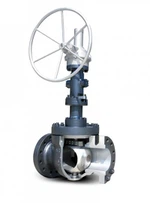
Top-Entry Ball Valve
Why Choose Us
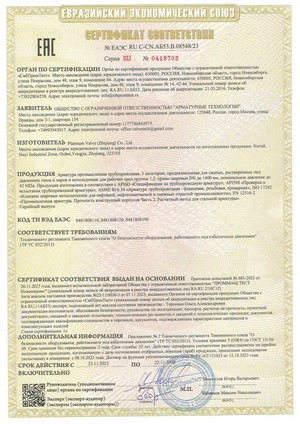
Our Certificate
ISO9001,API6D, CE,TR CU 032 and TR CU 01
Our services
Order tracking: We will establish a sound order tracking system, timely update the status of customer orders, to ensure that customers can understand in time Order progress.After-sales protection: Provide perfect after-sales protection.
Solution Customization
According to The Specific Needs of Customers, We Will Provide Personalized Solution Customization Services to Meet The Specific Needs of Customers.
Professional team
We Will Provide a Professional Technical Support Team to Solve Technical Problems Encountered In The Process of Product Selection and Use
What is Top-Entry Ball Valve
A top entry ball valve is used in piping systems and has a removable top trunnion. Unlike traditional spool valves, these devices are easy to maintain and service. They are usually made of metal castings and require special testing before being sold. The difference between a top-entry ball valve and a side-entry ball valve lies in their design. The top-entry valve allows maintenance to be performed without having to remove the entire valve from the line. This makes it much easier to perform maintenance tasks and ensures its reliability and safety. A top-entry valve is typically more expensive than a side-entry one, but it's worth it if you need to perform frequent maintenance. Because of its ease of maintenance and installation, it's a popular choice in industries where you need to make quick and efficient decisions.

Benefits of Top-Entry Ball Valve
Superior Sealing Performance
One of the key advantages of a top entry ball valve is its superior sealing performance. The design of the valve allows for easy access to the internal components, making it easier to maintain and repair the valve. This means that any potential leaks can be quickly addressed, reducing downtime and ensuring a more efficient operation. Top entry ball valves are also less prone to leaks compared to other types of ball valves, making them a reliable choice for critical industrial applications.
High Durability and Longevity
Top entry ball valves are known for their high durability and longevity. The robust construction of these valves ensures that they can withstand harsh operating conditions and continue to perform reliably over an extended period of time. This makes them an ideal choice for demanding industrial applications where durability and reliability are crucial. By investing in a top entry ball valve from a reputable supplier, businesses can ensure that their industrial processes run smoothly without any unexpected breakdowns or failures.
Ease of Maintenance and Repair
Another advantage of top entry ball valves is their ease of maintenance and repair. Unlike other types of ball valves that require extensive dismantling for maintenance, top entry ball valves can be serviced without removing the valve from the pipeline. This greatly reduces downtime and labor costs associated with maintenance activities, making top entry ball valves a cost-effective solution for industrial applications. Additionally, the ability to access the internal components of the valve easily allows for quick repairs, minimizing disruptions to the production process.
Versatile Application
Top entry ball valves are versatile and can be used in a wide range of industrial applications. Whether it is for controlling the flow of liquids, gases, or steam, top entry ball valves offer precise and reliable shut-off capabilities. Their ability to handle high pressures and temperatures makes them suitable for use in critical processes where safety and efficiency are paramount. By choosing a top entry ball valve from a trusted supplier, businesses can enjoy peace of mind knowing that their industrial operations are in good hands.
Types of Top-Entry Ball Valve
Full bore top entry ball valve
This type of valve has a full bore opening, which means the ball and seat have the same diameter as the pipeline. It offers minimal flow restriction and is suitable for applications where low pressure drop and high flow rates are required.
01
Reduced bore top entry ball valve
In contrast to the full bore valve, the reduced bore top entry ball valve has a smaller ball and seat diameter than the pipeline. This design can result in a higher pressure drop but is often used in applications where cost and space constraints are a consideration.
02
Trunnion-mounted top entry ball valve
Trunnion-mounted ball valves have additional support from trunnions, which are shafts that extend through the ball. This design provides increased stability and is commonly used in high-pressure and large-diameter applications.
03
Floating ball top entry ball valve
In a floating ball valve, the ball is not fixed and is free to move. The sealing is achieved by the pressure of the fluid against the ball. This type of valve is suitable for lower-pressure applications.
04
Metal seated top entry ball valve
Metal seated ball valves use metal-to-metal sealing between the ball and seat. They are suitable for high-temperature and abrasive fluid applications where resilient or soft-seated valves may not be able to withstand the conditions.
05
What Is The Difference Between Top Entry and Side Entry Ball Valves?
Top-entry ball valve: The design of the top-entry ball valve allows access from the top of the valve to the interior of the ball for repair and replacement. This construction typically includes a valve cover that is removable from above, allowing easy access to internal parts such as balls, seals, and bearings. The top-entry design provides direct and convenient access to the valve's internal parts, simplifying maintenance, forged steel swing check valve.
Side-entry ball valve: The inlet of the side-entry ball valve is located on the side of the valve body and is usually connected through a flange. This design allows the valve to be easily integrated into the piping system, and servicing can be done by simply removing the flange connection on one side to access the ball and other internal parts. Side-entry designs are generally more compact and suitable for applications where space is limited.
Repair and Replacement: The design of top-entry ball valves allows access to the interior of the valve from above for repair and replacement without completely disassembling the valve from the piping system. This design is particularly suitable for large, heavy and high-position valves as it reduces the complexity and risk of repair work. Side-entry ball valves require removal of the flange connection on one side to access internal parts, which can be more difficult and costly in some applications.
Initial cost: The manufacturing process of a top-entry ball valve can be more complex and time-consuming, as it requires the design of a removable top structure and corresponding sealing system. This can result in a higher initial cost for a top-entry ball valve than a side-entry ball valve. However, in terms of long-term maintenance and operation, a top-entry design may have a lower overall cost because it reduces the complexity of repair work and downtime.
Operating torque: Top-entry ball valves generally have low operating torque due to their structural design. This makes manual or automated operation easier and more reliable. In contrast, side-entry ball valves may require greater operating torque to overcome the frictional resistance of flange connections and other internal parts.
Leakage rate: The side-entry design of side-entry ball valves can result in a higher risk of leakage, especially in high-pressure and large-bore applications. Therefore, stricter sealing systems and quality control are needed to ensure the reliability and safety of valves. In contrast, top-entry ball valves generally provide better sealing performance and lower leakage rates due to their top-entry construction, wafer type double check valve.
Components of Top-Entry Ball Valve
Valve body
The valve body is the foundation of the ball valve and bears the pressure and temperature of the fluid. Usually made of cast iron, cast steel, stainless steel and other materials to ensure its strength and durability. The design of the valve body needs to consider factors such as the properties of the fluid, working pressure and temperature to ensure its stability and safety.
Valve cover
The valve cover and the valve body are closely combined to form a fluid channel. The material and thickness of the valve cover need to be selected according to the actual application scenario to ensure its ability to withstand pressure and temperature changes.
Sphere
As the core component of the ball valve, the ball controls the flow of fluid. The diameter of the through hole on its surface determines the flow rate of the fluid. The sphere is usually made of stainless steel, ceramics and other materials, which not only ensures its wear resistance but also ensures its sealing performance, globe valve manufacture.
Valve stem
The valve stem connects the actuator (such as a handle, motor or pneumatic device) and the ball, transmitting power to rotate the ball. The design and material selection of the valve stem need to consider its bending resistance, torsional strength and sealing with the ball.
Sealing ring
The sealing ring ensures the sealing between the ball, the valve body and the valve cover to prevent fluid leakage. Commonly used sealing ring materials include polytetrafluoroethylene, rubber and metal gaskets. The selection of sealing rings needs to consider factors such as the nature of the fluid, working pressure and temperature.
Packing
Packing is located on the outside of the valve stem and prevents fluid from leaking along the valve stem. Commonly used filler materials include graphite, polytetrafluoroethylene, etc. The selection and design of the packing need to ensure its sealing performance and durability.

Top-entry ball valves have three main components: a valve body, a stem assembly, and an actuator (or handle). The valve body houses an internal disc attached to the stem, which extends up through the top entry port. When you turn the handle on the stem clockwise, it moves down into a closed position, while turning it counter clockwise moves it up into an open position, allowing fluid/gas to flow through it. The actuator also has two positions – one for open/closed indication and one for locking down in either position so that no further adjustments can be made until manually unlocked with a unique key provided with each unit.
How to Maintain Top-Entry Ball Valve
The importance of maintenance
While top-entry ball valve are celebrated for their robustness and resilience, they are not impervious to wear, tear, or issues arising from various operational factors. Neglecting the maintenance of top-entry ball valve can lead to a host of problems, ranging from minor inefficiencies to major disruptions. Here is why maintenance is of paramount importance:
Preventing leaks
One of the primary functions of a ball valve is to prevent leaks. The tight seal created by the spherical disc and the valve seat is critical to this function. Neglecting maintenance can lead to wear and damage, compromising the integrity of the seal and resulting in leaks.
Ensuring efficient operation
Well-maintained top-entry ball valve operate with precision, enabling the system to respond promptly to changes in flow requirements. Inefficient operations can lead to a waste of resources and increased operational costs.
Extending lifespan
Regular maintenance ensures the longevity of top-entry ball valve. Minor issues, if left unattended, can escalate into major problems that necessitate expensive repairs or even replacements.
Preventing system contamination
In industries such as food and pharmaceuticals, contamination is a critical concern. Proper maintenance of top-entry ball valve prevents the accumulation of debris, preventing contamination risks.
Safety assurance
In critical industries like oil and gas, safety is non-negotiable. Neglected top-entry ball valve can lead to safety hazards through uncontrolled leaks or failures in shut-off functions.
Our Factory
Workshop is in Oubei-Zhejiang, our company covers a land area of 6000㎡ and introduces world's advanced valve machining and manufacturing equipment. Our company has a perfect enterprise standardization management system and adopts world's advanced precision casting technology and modern electronic inspection systems. The internationally advanced management mode is applied during the whole production process from material selection till delivery of finished products, so that specialized, automatic, standardized and programmed production is realized. Taking technological innovation as the guide for enterprise development, our company has established the CAD valve design center, three-dimensional analog manufacturing and design system, valve inspection center and testing platform to optimize product structures and ensure the quality and speed of research, development and production of new products.


Certificate