


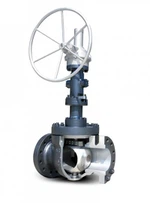

Pneumatic Three Way Ball Valve
Pneumatic Three Way Ball Valve
The Pneumatic Three Way Ball Valve combines a three-port ball valve with a pneumatic actuator to control fluid routing in industrial piping systems. Depending on the ball-port configuration and operating position, it can divert flow between outlets, select between inlets, or connect multiple ports for distribution or mixing.
Product Overview
L-Port and T-Port Configurations: Select the ball-port arrangement according to the required flow paths and port connections.
Pneumatic Actuation: Supports automated valve operation through a compatible compressed-air supply and control system.
Configurable Valve Assembly: Body materials, seats, seals, actuator type, end connections, and control accessories can be selected according to the operating conditions and project requirements.
L-Port vs. T-Port Flow Configurations
The ball-port design determines which ports communicate in each operating position. Confirm the flow diagram for the specific valve model before installation or system design.
|
Configuration |
Typical Function |
Selection Considerations |
|
L-Port |
Flow diversion or source selection |
Typically connects two ports at a time. The available flow paths depend on the ball bore and operating position. |
|
T-Port |
Flow distribution, mixing, or multi-port routing |
Can connect different port combinations, including all three ports in certain positions, depending on the internal design. |
Pneumatic Actuator & Control Options
Actuator Types
- Double-Acting Actuator: Uses compressed air for both opening and closing strokes. Suitable when pneumatic power is available for both directions of operation.
- Spring-Return Actuator: Uses compressed air for one stroke and spring force for the return stroke. The resulting valve position after air failure depends on the actuator arrangement and valve flow configuration.
- Actuator Sizing: Required torque depends on valve size, differential pressure, seat material, process conditions, operating frequency, and available air pressure.
Control Accessories
- NAMUR Solenoid Valve: Provides electrical control of pneumatic actuator operation when compatible with the actuator interface.
- Limit Switch Box: Supplies valve-position feedback for monitoring and control systems.
- Electro-Pneumatic Positioner: An optional control device for applications requiring modulating operation, subject to valve and actuator compatibility.
- Air Filter Regulator: Conditions and regulates the instrument air supply according to the actuator requirements.
Materials & Sealing Options
|
Component |
Available Options |
Selection Considerations |
|
Valve Body |
Stainless steel 304 / 316, cast stainless steel CF8 / CF8M, carbon steel WCB |
Confirm the exact material grade, corrosion conditions, pressure rating, and applicable product standard. |
|
Ball & Stem |
Stainless steel grades such as 304 / 316, subject to model availability |
Verify compatibility with the process medium and required mechanical properties. |
|
Seats & Seals |
PTFE, RPTFE, PEEK, or specified elastomers; metal seats where available |
Select according to media compatibility, temperature, pressure, leakage requirements, and operating frequency. |
|
End Connections |
Flanged, threaded, sanitary clamp, or welded configurations, subject to model availability |
Confirm the applicable connection standard, dimensions, and piping requirements. |
Technical Specifications
The following table identifies key selection parameters. Final ratings and available configurations must be confirmed against the selected model's datasheet.
|
Parameter |
Specification / Selection Basis |
|
Product Type |
Pneumatic Three Way Ball Valve |
|
Ball-Port Configuration |
L-Port / T-Port, according to model |
|
Nominal Size |
DN15–DN200 (NPS 1/2–8), subject to model availability |
|
Pressure Rating |
Specify the applicable PN rating, ASME Class, or WOG rating for the selected model |
|
Operating Temperature |
Determined by seat and seal materials, body rating, pressure, and process medium |
|
Body Materials |
Stainless steel 304 / 316, CF8 / CF8M, or WCB, subject to model availability |
|
Ball & Stem Materials |
Stainless steel grades according to the selected configuration |
|
Seat & Seal Materials |
PTFE, RPTFE, PEEK, elastomers, or optional metal seats |
|
End Connections |
Flanged, threaded, sanitary clamp, or welded, as available |
|
Actuator Type |
Pneumatic rack-and-pinion or other compatible actuator designs, subject to model availability |
|
Air Supply Pressure |
Confirm the actuator's specified operating range and required torque at the available pressure |
|
Control Accessories |
Solenoid valve, limit switch box, positioner, and air filter regulator, as applicable |
|
Design & Testing Standards |
Confirm applicable valve design, pressure testing, and actuator mounting standards for the specific model |
|
Documentation |
Material certificates, pressure test reports, inspection records, and conformity documents where applicable |
Temperature and Pressure Verification: Do not select a valve based on a seat material's nominal temperature limit alone. Verify the approved pressure-temperature rating for the complete valve assembly and the intended operating medium.
Applications & Operating Conditions
Typical Applications
Chemical Process Piping: Route compatible process liquids between designated lines or equipment. Confirm body and seat compatibility with the actual chemical medium.
Automated Process Skids: Integrate three-way flow switching into packaged equipment, manifolds, and automated process systems.
Water Treatment Systems: Select or divert flow within filtration, treatment, and distribution circuits according to the system's port arrangement.
Food & Beverage Processing: Use compatible sanitary configurations where the valve's materials, surface finish, cleanability, and applicable hygiene requirements have been verified.
Application Verification Checklist
- Before selecting a valve, confirm:
- Process medium, concentration, operating pressure, temperature, and differential pressure.
- Required inlet, outlet, and common-port arrangement.
- Permitted flow paths at each operating position.
- Required valve position and port connections after air supply failure.
- Seat and seal compatibility with the process medium
- Required leakage performance, applicable standards, and documentation.
- Connection dimensions, installation space, actuator torque, and available instrument air.
Flow Isolation Note: A three-way ball valve is primarily used for flow routing. Its ability to isolate individual ports depends on the ball-port design and sealing arrangement. Do not assume simultaneous positive shut-off at all ports unless the specific design and leakage requirements have been verified.
Manufacturing, Inspection & Quality Documentation
Manufacturing and inspection requirements should be matched to the specified valve model and purchase order.
Actuator Matching: Verify actuator torque against the valve's operating requirements and the minimum available air pressure, using the applicable sizing data and safety margin.
Pressure & Seat Testing: Confirm the applicable shell and seat test procedures, acceptance criteria, and inspection scope against the selected valve specification and purchase requirements.
Material Traceability: Specify material identification and EN 10204 3.1 inspection certificates where required and available.
Project Documentation: Inspection records, pressure test reports, dimensional information, and conformity documents can be specified according to the applicable product requirements.
Customization & RFQ Requirements
To support accurate valve selection and quotation, include the following information in your inquiry.
Valve Requirements
Nominal size (DN/NPS), pressure rating, end connection, and applicable connection standard.
L-Port or T-Port configuration, port numbering, required flow paths, and switching positions.
Body, ball, stem, seat, and seal materials.
Operating Conditions
Process medium and chemical composition.
Normal and maximum operating pressure, differential pressure, and temperature range.
Required leakage performance and applicable design or testing standards.
Actuation & Controls
Double-acting or spring-return actuator.
Required valve position and flow path after air supply failure.
Available instrument air pressure, electrical control voltage, and required accessories.
On-off or modulating control requirements, if applicable.
Project & Documentation
Order quantity and target delivery date.
Required material certificates, test reports, and conformity documentation.
Installation drawings, piping interface details, or existing valve model references, where available.
Request a Quote: Submit your operating conditions and required flow diagram so the valve configuration, actuator sizing, materials, and documentation can be reviewed against your application.
Frequently Asked Questions
Q: What is the difference between an L-Port and a T-Port three-way ball valve?
A: An L-Port design typically connects two ports at a time for flow diversion or source selection. A T-Port design can provide additional routing combinations and may connect all three ports in certain positions. The exact flow paths depend on the internal ball design and operating position.
Q: Should I choose a double-acting or spring-return actuator?
A: Choose a double-acting actuator when compressed air is used for both operating strokes. Choose a spring-return actuator when the valve must move toward a designated position after air supply failure. Verify the required final flow path, available air pressure, and actuator torque before selection.
Q: How do I select the correct seat material?
A: Consider the process medium, chemical concentration, operating temperature, pressure, differential pressure, and required leakage performance. PTFE, RPTFE, PEEK, elastomers, and metal seats have different application limits.
Q: Can a three-way ball valve completely shut off all three ports?
A: Not necessarily. Port isolation depends on the ball-port geometry, seat arrangement, and valve position. If the process requires specific isolation combinations or simultaneous shut-off, confirm the flow diagram and leakage performance for the exact model.
Q: What information is needed for actuator sizing?
A: Provide the valve model and size, pressure differential, seat material, operating conditions, available air pressure, required operating speed, and fail-position requirements. The actuator should be selected using the applicable torque data for the complete valve assembly.
Q: Which certificates and test reports are available?
A: Available documents depend on the valve model, materials, applicable standards, and purchase requirements. Specify the required material certificates, pressure test reports, inspection records, and conformity documentation during the RFQ stage so their availability and applicability can be confirmed.
Hot Tags: pneumatic three way ball valve, China pneumatic three way ball valve manufacturers, suppliers
Previous
No InformationYou Might Also Like
Send Inquiry