


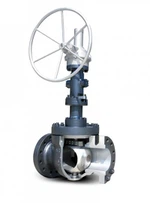

Three Piece Socket Weld Ball Valve
Three Piece Socket Weld Ball Valve
Three-piece socket weld ball valves provide quarter-turn on/off flow control for industrial piping systems requiring welded end connections. The bolted body design allows access to internal components for inspection and maintenance, while the socket weld ends provide permanent pipe connections.
Product Overview
Three-Piece Body Construction
Serviceable Center Body: The bolted construction allows the center section to be removed for access to the ball, seats, and seals after the valve is isolated and depressurized.
Maintenance Access: The two end caps can remain welded to the pipeline during servicing, provided the valve design and installation arrangement permit center-body removal.
Socket Weld End Connections
Permanent Welded Joints: Suitable for piping systems specified for socket weld connections, subject to the valve design and applicable piping requirements.
Pipe Compatibility: Confirm nominal pipe size, schedule, socket dimensions, welding procedure, and installation clearance before ordering.
Quarter-Turn Operation
Manual or Actuated Control: Available operating configurations may include a lever handle, gear operator, or pneumatic/electric actuator, depending on the selected model.
Automation Options: Confirm ISO 5211 mounting compatibility, actuator interface dimensions, and operating torque for the specific valve.
Key Design Features
Ball, Seats, and Seals
Floating Ball Design: Commonly used in small-bore ball valves. Suitability depends on valve size, pressure rating, and the manufacturer's design.
Seat Material Selection: PTFE, reinforced PTFE, PEEK, or other specified materials may be available, subject to temperature, pressure, and media compatibility.
Safety and Special Configurations
Stem Retention: Confirm whether the selected model incorporates a blowout-resistant stem design.
Anti-Static and Fire-Safe Options: These features should be specified where required and supported by the relevant design documentation or test certification.
Port and Mounting Options
Full or Reduced Port: Select according to flow requirements, allowable pressure drop, and available installation space.
Actuator Mounting: Direct mounting is available only where the valve has a compatible mounting interface and sufficient operating torque capacity.
Technical Specifications
|
Parameter |
Selection Options / Requirements |
|
Valve Type |
Three-piece socket weld ball valve |
|
Nominal Size |
Confirm available sizes for the selected model |
|
Pressure Rating |
Confirm the model-specific pressure class and pressure-temperature rating |
|
Body Materials |
Stainless steel, carbon steel, or other available grades; confirm exact material specification |
|
Ball and Stem Materials |
Specify required grades, such as 304 or 316 stainless steel, subject to availability |
|
Seat and Seal Materials |
PTFE, reinforced PTFE, PEEK, or other available materials |
|
Port Design |
Full port or reduced port, where available |
|
End Connection |
Socket weld; confirm pipe size, schedule, and connection dimensions |
|
Operation |
Lever handle, gear operator, or compatible pneumatic/electric actuator |
|
Design Standard |
Confirm applicable valve design standard for the selected model |
|
Inspection and Testing |
Confirm applicable pressure and seat leakage test requirements |
|
Documentation |
Material certificates, pressure test records, and conformity documents as agreed |
Applications and Installation
Typical Applications
Industrial Process Piping: On/off isolation for compatible fluids in chemical, petrochemical, and general industrial systems.
Skid-Mounted Equipment: Compact piping assemblies where socket weld connections and service access are specified.
Utility and OEM Systems: Water, oil, gas, compressed air, or other media, subject to material compatibility and the valve's rated operating conditions.
Installation Requirements
Welding Procedure: Follow the valve manufacturer's installation instructions and the approved welding procedure to control heat input and prevent seat or seal damage.
Pipe Alignment: Align connecting pipes correctly and avoid imposing excessive external loads on the valve.
Maintenance Clearance: Allow sufficient space for body-bolt removal and center-section access where servicing is required.
Quality Control and Documentation
Inspection and Testing
Dimensional Inspection: Verify critical dimensions, socket connections, and other specified tolerances against approved drawings.
Pressure and Seat Testing: Confirm shell and seat test procedures, acceptance criteria, and test records against the applicable valve standard and purchase specification.
Material Traceability
Material Verification: Material test reports and heat-number traceability can be specified where available and contractually agreed.
Compliance Documentation: ISO 9001, PED, fire-safe, or other certification claims should be confirmed for the actual manufacturing facility, product model, and supply scope before ordering.
Customization and RFQ Requirements
Valve Requirements: Nominal size, quantity, pressure rating, port type, and applicable design standard.
Materials: Body, ball, stem, seat, and seal material grades.
Operating Conditions: Process medium, normal and design pressure, temperature range, and required leakage acceptance criteria.
Connection and Operation: Pipe size and schedule, socket dimensions, manual or actuated operation, and mounting requirements.
Documentation: Material certificates, inspection records, third-party testing, fire-safe certification, or other required compliance documents.
Frequently Asked Questions
Q: What is the difference between socket weld and threaded ball valves?
A: Socket weld valves use permanent welded pipe connections, while threaded valves use mechanical threaded joints. The appropriate connection depends on piping specifications, operating conditions, maintenance requirements, and applicable codes.
Q: Can a three-piece socket weld ball valve be serviced without cutting the pipe?
A: Potentially, yes. The center body can be removed on designs that permit this arrangement, provided the pipeline is isolated, depressurized, drained, and sufficient clearance is available. Follow the manufacturer's service procedure.
Q: How can seat damage during welding be avoided?
A: Follow the manufacturer's welding instructions. Some designs require removal of the center body or protection of internal components before welding. Do not disassemble the valve unless the manufacturer permits it and provides the correct procedure.
Q: How should the seat material be selected?
A: Consider the process medium, operating and design temperatures, pressure differential, cycling frequency, and presence of abrasive particles. Confirm the selected seat material's limits using the manufacturer's technical data.
Q: Which standards and certificates can be supplied?
A: Applicable design, inspection, pressure-testing, material, and fire-safe requirements depend on the selected model and purchase specification. Confirm the exact standards and available certificates before placing an order.
Hot Tags: three piece socket weld ball valve, China three piece socket weld ball valve manufacturers, suppliers
You Might Also Like
Send Inquiry