


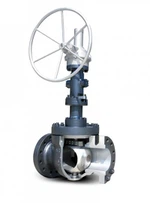

Electric Actuated Flanged Ball Valve
Electric Actuated Flanged Ball Valve
An Electric Actuated Flanged Ball Valve combines a quarter-turn ball valve with an electric actuator for remote pipeline isolation or modulating flow control. Flanged connections support integration into industrial piping systems where the valve dimensions, pressure rating, materials, and actuator configuration match the system requirements.
Automated Operation: Supports electric On/Off switching or modulating control, depending on actuator configuration.
Flanged Connection: Available flange standards and pressure ratings depend on the selected valve model.
Application Flexibility: Suitable for evaluating use in water treatment, HVAC, general process piping, and OEM equipment.
Key Features and Configuration Options
Electric Actuator
- Control Modes: On/Off operation for isolation or modulating control for intermediate valve positioning.
- Electrical Interfaces: Power supply, control signals, position feedback, and communication protocols depend on the selected actuator.
- Manual Override and Protection: Manual operation, enclosure protection, and fail-safe options can be specified according to installation and operating requirements.
Ball Valve Design
- Valve Body and Trim: Material options may include carbon steel, stainless steel, and other alloys, subject to model availability.
- Seat and Seal Options: PTFE, reinforced PTFE, PEEK, or other compatible materials can be evaluated against the medium, temperature, pressure, and leakage requirements.
- Flanged Ends: ASME, EN, or JIS configurations may be available. Confirm dimensional compatibility before ordering a replacement valve.
Technical Specifications
The following table provides a preliminary selection framework. Confirm the actual available ranges and combinations against the product datasheet before specifying or ordering.
|
Parameter |
Available Options / Selection Requirements |
|
Valve Type |
Electric actuated flanged ball valve |
|
Nominal Size |
DN15–DN300 (1/2–12 in), subject to model confirmation |
|
Pressure Rating |
PN10, PN16, PN25, PN40; ASME Class ratings subject to model |
|
Flange Standards |
ASME B16.5, EN 1092-1, JIS B2220, subject to configuration |
|
Face-to-Face |
Applicable dimensions and standard to be confirmed by valve design |
|
Body Materials |
Carbon steel, stainless steel; other alloys subject to availability |
|
Ball and Stem |
Stainless steel or other specified materials |
|
Seat Materials |
PTFE, RPTFE, PEEK, subject to service conditions |
|
Control Mode |
On/Off or modulating |
|
Power Supply |
24 V DC, 110 V AC, 220 V AC, 380 V AC, subject to actuator model |
|
Control Signals |
Open/close commands; 4–20 mA or 0–10 V for compatible modulating actuators |
|
Feedback / Communication |
Limit switches, position transmitter, or communication interface, if equipped |
|
Enclosure Protection |
IP rating to be confirmed for the selected actuator |
|
Operating Conditions |
Medium, temperature, working pressure, and maximum differential pressure must be specified |
|
Inspection |
Applicable shell and seat tests to be confirmed against the valve specification |
|
Documentation |
Datasheet, dimensional drawing, test records, and material documents as agreed |
How to Select the Right Configuration
Define the Operating Conditions: Specify the medium, normal and maximum pressure, temperature, maximum differential pressure, and operating frequency. Check material compatibility with the actual service conditions.
Choose the Control Mode: Select On/Off for fully open or closed operation. Choose modulating control when intermediate positioning is required for process regulation.
Match the Actuator: Verify required torque using the valve manufacturer's torque data and the actual operating conditions. Confirm supply voltage, control signal, duty cycle, and required feedback.
Confirm Installation Requirements: Check nominal size, flange standard, pressure rating, face-to-face dimensions, actuator clearance, and electrical enclosure requirements.
Applications
Water and Wastewater Treatment: Pipeline isolation in water distribution, filtration, and compatible chemical dosing systems, subject to material selection.
HVAC and District Cooling: Automated isolation of chilled-water branches and other compatible fluid circuits.
Industrial Process Piping: Remote switching or flow regulation where the selected valve and seat materials are suitable for the process medium.
OEM Equipment and Skids: Integration into automated machinery and packaged process systems with defined electrical and piping interfaces.
Manufacturing and Quality Control
Inspection and documentation requirements should be agreed according to the selected valve model, applicable standards, and purchase specification.
Material Verification: Material certificates and identification checks can be specified for applicable pressure-retaining components.
Pressure and Seat Testing: Define the applicable test standard, acceptance criteria, and test documentation in the purchase order.
Actuator Function Checks: Confirm opening and closing operation, travel limits, control inputs, and feedback functions as applicable.
Compliance Documentation: Request relevant quality certificates, declarations, and third-party inspection records where available and applicable to the supplied configuration.
Engineering Drawings and Technical Documents
Dimensional Drawings: Request valve face-to-face dimensions, flange details, and actuator clearance drawings for installation review.
CAD Files: STEP, IGES, or other formats may be requested, subject to availability for the selected configuration.
Electrical Documents: Confirm wiring diagrams, terminal assignments, actuator manuals, and control-interface details before integration.
Request a Quote
Provide the following information to support accurate configuration review and quotation.
Valve Requirements: Nominal size, quantity, pressure rating, flange standard, and face-to-face dimensions if replacement is required.
Operating Conditions: Medium, normal and maximum pressure, temperature, maximum differential pressure, and operating frequency.
Actuator Requirements: Power supply, On/Off or modulating control, signal type, feedback, enclosure protection, and fail-safe requirements.
Materials and Documentation: Body, ball, stem, and seat preferences; applicable standards; inspection requirements; delivery destination; and requested technical documents.
Frequently Asked Questions
Q: How is the correct electric actuator selected?
A: Actuator sizing should be based on the valve manufacturer's torque data, maximum differential pressure, seat design, medium, operating temperature, and required duty cycle. The final selection should include an engineering-verified allowance appropriate to the application.
Q: What is the difference between On/Off and modulating control?
A: On/Off actuators move the valve between its open and closed positions. Modulating actuators accept compatible control signals, such as 4–20 mA or 0–10 V, to position the valve at intermediate openings. Actual control accuracy depends on the actuator and valve configuration.
Q: Can the valve be used outdoors or in hazardous areas?
A: Outdoor suitability depends on the actuator enclosure rating, ambient conditions, cable entries, and installation. Hazardous-area applications require an actuator with the appropriate certification for the specific area classification and environmental conditions.
Q: What documents should be requested before ordering?
A: Request the product datasheet, dimensional drawing, actuator wiring diagram, applicable material certificates, and pressure and seat test reports. Any required certification or third-party inspection should be confirmed before order placement.
Hot Tags: electric actuated flanged ball valve, China electric actuated flanged ball valve manufacturers, suppliers
You Might Also Like
Send Inquiry