


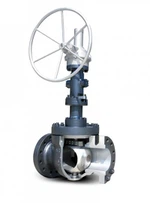

High Torque Electric Ball Valve
High Torque Electric Ball Valve
A High Torque Electric Ball Valve combines a quarter-turn ball valve with an electric actuator selected to meet the valve's operating torque requirements. It is used for automated pipeline isolation and, when the valve and actuator are suitably configured, modulating flow control.
The required actuator torque depends on valve size, differential pressure, seat design, media properties, temperature, operating frequency and other service conditions. Correct sizing helps prevent actuator overload and incomplete valve operation.
Product Overview
Key Benefits
Torque-Based Selection: Match actuator output to the valve's breakaway, running and seating torque requirements.
Flexible Valve Configurations: Select floating-ball or trunnion-mounted designs, subject to size, pressure rating and model availability.
Automated Operation: Configure on/off control or modulating positioning according to process requirements.
Application-Specific Materials: Evaluate body, ball, seat and seal materials against media compatibility, pressure and temperature.
Integration Options: Specify mounting interfaces, position feedback, electrical controls and environmental protection to suit the installation.
Key Features & Torque Selection
Actuator Torque Matching
- Valve Torque Requirements: Assess breakaway, running and seating torque under the specified operating conditions.
- Actuator Output: Verify available output torque throughout the required stroke and against the selected valve's torque data.
- Operating Duty: Match motor duty rating, starts per hour and stroke time to the required operating frequency and load.
The actuator sizing margin should be determined from the valve manufacturer's torque data, service conditions and actuator characteristics. A single safety factor should not be assumed suitable for every application.
Valve Construction & Sealing
- Ball Design: Floating-ball or trunnion-mounted construction, depending on the selected model and operating requirements.
- Seat Options: Soft seats or metal seats, with material selection based on temperature, media compatibility, differential pressure and leakage requirements.
- Flow Passage: Full-bore or reduced-bore configurations, subject to model availability and pipeline requirements.
Electrical Control & Protection
- Control Mode: On/off operation or modulating control where supported by the actuator.
- Position Feedback: Limit switches or continuous position feedback, depending on the selected configuration.
- Environmental Protection: Specify the required enclosure rating and hazardous-area certification for the installation environment.
Technical Specifications
The following table identifies the main selection parameters. The ranges listed in the initial product brief are retained as provisional configuration targets, not as verified capabilities of every model. Confirm the available combinations against the final product datasheet.
|
Parameter |
Configuration / Selection Requirement |
|
Product Type |
High Torque Electric Actuated Ball Valve |
|
Valve Construction |
Floating Ball / Trunnion-Mounted, model dependent |
|
Nominal Size |
Proposed range: DN15–DN600 (1/2"–24"); confirm model availability |
|
Pressure Rating |
Proposed range: ASME Class 150–2500 / PN16–PN420; confirm applicable combinations |
|
Valve Design Standards |
API 6D, ASME B16.34, ISO 17292 or other applicable standard, depending on design |
|
Body Materials |
Carbon Steel, Low-Temperature Carbon Steel, Stainless Steel or Duplex, subject to grade and model |
|
Seat Materials |
PTFE, R-PTFE, PEEK, Devlon or metal-seated options, subject to availability |
|
End Connections |
Flanged, threaded or butt-welded, depending on valve design |
|
Mounting Interface |
ISO 5211 interface where applicable |
|
Power Supply |
Specify required voltage, phase and frequency; confirm actuator availability |
|
Control Mode |
On/off or modulating, subject to actuator configuration |
|
Control Signals |
4–20 mA, 0–10 V or supported communication protocols |
|
Position Feedback |
Limit switches or position transmitter, where available |
|
Enclosure Protection |
Specify required IP or NEMA rating for the selected actuator |
|
Hazardous-Area Requirements |
Specify gas/dust classification and required certification; confirm the exact actuator certificate |
|
Manual Override |
Handwheel or other available manual operating mechanism |
Technical notes
Pressure class, nominal size, body material, seat design and end connection must be checked as a compatible configuration, not selected independently.
Pressure–temperature ratings must be confirmed for the actual valve material, design and seat configuration.
Leakage acceptance must identify the applicable valve test standard and specified acceptance criterion. ISO 5208 and ANSI/FCI 70-2 classifications should not be treated as interchangeable.
ATEX, IECEx and other hazardous-area claims require verification against the certificate for the selected actuator model.
The final datasheet should state actual torque output, stroke time, duty rating, power consumption and operating limits.
Applications & Configuration
Typical Application Areas
Water Treatment & Desalination
Automated isolation in water-treatment and seawater systems. Confirm pressure differential, corrosion resistance, seat compatibility and actuator enclosure requirements.
Chemical & Petrochemical Processing
Valve and actuator selection for process fluids, subject to chemical compatibility, operating temperature, pressure and hazardous-area requirements.
HVAC & District Energy
Motorized isolation and bypass duties where valve pressure rating, flow conditions and actuator operating frequency meet the system requirements.
Mining & Slurry Handling
Evaluate seat design, wear resistance, solids content and operating torque before specifying a ball valve for abrasive service.
Application Engineering Considerations
For a high-pressure seawater reverse osmosis (SWRO) system, for example, the selection review should cover:
Maximum differential pressure across the valve.
Seawater compatibility of the body, ball, stem, seats and seals.
Breakaway torque following extended periods in the closed position.
Actuator output torque, duty rating and enclosure protection.
Required leakage acceptance criteria and applicable inspection documentation.
Final suitability must be established from the actual process conditions and verified valve and actuator data. No specific project performance should be assumed without supporting records.
Manufacturing & Quality Control
Manufacturing and Assembly Verification
Material Documentation: Material certificates and traceability records, where included in the agreed supply scope.
Dimensional Inspection: Verification of specified dimensions, interfaces and critical machining features against approved drawings.
Actuator Setup: Check mounting alignment, travel limits and control settings according to the selected assembly.
Inspection & Testing
|
Inspection Item |
Verification Requirement |
|
Shell Pressure Test |
Applicable test standard, pressure and acceptance criteria |
|
Seat Leakage Test |
Specified leakage criterion under defined test conditions |
|
Functional Test |
Opening/closing operation, travel limits and feedback |
|
Electrical Test |
Applicable wiring, insulation and functional checks |
|
Torque Verification |
Actuator output data or test records, where available |
|
Material Certification |
Required material grade, certificate type and traceability scope |
API 598, ISO 5208 or EN 12266-1 may apply depending on the valve design, contract and selected compliance requirements. The applicable standard and test procedure should be confirmed before order placement.
Fugitive-emission testing, third-party inspection, Factory Acceptance Testing (FAT) and additional documentation should be specified in the RFQ and confirmed as part of the supply scope. Do not assume these are included with every model.
RFQ Requirements & Technical Review
Provide the following information to support valve selection and actuator sizing.
Operating Conditions
Working medium, concentration, viscosity and solids content, if applicable.
Normal and maximum operating pressure, including maximum differential pressure.
Minimum, normal and maximum operating temperatures.
Required operating frequency and expected service conditions.
Valve Requirements
Nominal size, pressure class and applicable design standard.
Preferred body, ball, stem, seat and seal materials.
End connection type and applicable dimensions.
Full-bore or reduced-bore requirement.
Required seat leakage acceptance criterion.
Actuator & Electrical Requirements
Supply voltage, phase and frequency.
On/off or modulating control.
Required stroke time and operating frequency.
Position feedback and communication interface.
Enclosure rating and hazardous-area classification, if applicable.
Manual override and fail-safe requirements, if needed.
Documentation & Project Requirements
Material certificates and inspection documentation.
Applicable valve, electrical and hazardous-area standards.
Required third-party inspection or FAT.
Installation environment and destination market.
Required delivery schedule and quantity.
If the exact torque requirement is unknown, provide the existing valve model, valve datasheet, system P&ID or available operating data. These documents can support a preliminary technical review; final actuator sizing requires adequate valve torque and operating-condition information.
Frequently Asked Questions
Q: What is a High Torque Electric Ball Valve?
A: It is a quarter-turn ball valve fitted with an electric actuator selected to meet the valve's operating torque requirements. It is used for automated isolation and, where the valve and actuator support it, modulating control.
Q: How is the required actuator torque determined?
A: Selection begins with the valve's breakaway, running and seating torque under the specified operating conditions. The actuator's output characteristics, duty rating, operating frequency and an appropriate engineering margin must then be evaluated against the valve manufacturer's data.
Q: Can the valve operate under high differential pressure?
A: Suitability depends on the valve design, nominal size, pressure rating, seat configuration and maximum differential pressure. Confirm the allowable operating conditions and torque requirements for the selected model before ordering.
Q: Are explosion-proof actuator options available?
A: Hazardous-area configurations may be available depending on the actuator range. Confirm the required gas or dust classification, zone or division, temperature class and applicable certification against the exact actuator model and certificate.
Q: What testing and documentation can be supplied?
A: Documentation may include material certificates, pressure and seat leakage test reports, dimensional inspection records, actuator functional test results and FAT documentation, depending on the agreed scope. Required standards and deliverables should be confirmed in the purchase specification.
Q: What information is needed for a quotation?
A: Provide valve size, pressure rating, medium, pressure differential, temperature, material requirements, end connections, electrical supply, control mode and any certification requirements. An existing model number or technical drawing can also help clarify the selection.
Request a Technical Quote
Submit your valve specifications and operating conditions for a technical review.
Valve size, pressure rating and maximum differential pressure.
Media properties and operating temperature.
Required actuator torque, control mode and electrical supply, if known.
Applicable standards, certificates and inspection requirements.
Request a Technical Quote to discuss a configuration that matches your operating conditions and project requirements.
Hot Tags: high torque electric ball valve, China high torque electric ball valve manufacturers, suppliers
You Might Also Like
Send Inquiry