


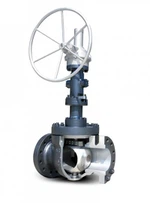

Modulating Electric Ball Valve
Modulating Electric Ball Valve
A Modulating Electric Ball Valve combines a quarter-turn ball valve with an electric actuator and modulating controller to adjust valve position in response to an external control signal.
Product Overview
Modulating Position Control: Supports intermediate valve positioning through compatible 4–20 mA or 0–10 V DC control signals.
Automated System Integration: Can interface with PLC, DCS, BMS, or other control systems, subject to signal and communication compatibility.
Application-Specific Configuration: Valve materials, seat design, flow capacity, end connections, and actuator options can be selected according to project requirements.
Documented Inspection: Material certificates, pressure test reports, and functional test records can be specified according to the order requirements.
Key Features & Configuration
Modulating Control
- Input Signal: 4–20 mA or 0–10 V DC, subject to actuator configuration.
- Position Feedback: Optional 4–20 mA output, limit switches, or digital status feedback, depending on the selected actuator.
- Control Characteristics: Standard-bore or V-port ball options can be evaluated according to required flow characteristics and throttling conditions.
Valve & Actuator Matching
- Quarter-Turn Operation: The ball rotates approximately 90° between the fully open and fully closed positions.
- Torque Selection: Actuator output torque must be checked against valve operating torque, differential pressure, temperature, media properties, and the required operating margin.
- Power-Loss Response: Fail-open or fail-closed operation requires a compatible fail-safe actuator configuration. Fail-in-place capability depends on the actuator design and power-loss conditions.
Materials & Connections
- Valve Body: Carbon steel, including WCB or LCC where applicable, stainless steel such as CF8, CF8M or CF3M, or other materials subject to availability and process requirements.
- Ball & Seats: PTFE, reinforced PTFE, PEEK, or metal-seated configurations, selected according to media compatibility, temperature, pressure, and leakage requirements.
- End Connections: Flanged, threaded, socket-weld, or sanitary clamp connections, subject to the selected valve design and applicable connection standards.
Technical Specifications
|
Parameter |
Available Options / Selection Requirements |
|
Valve Type |
Modulating electric ball valve |
|
Nominal Size |
DN15–DN300 / NPS 1/2–12, subject to model availability |
|
Body Materials |
Carbon steel, stainless steel, or specified alloy |
|
Ball & Seat Materials |
PTFE, reinforced PTFE, PEEK, or metal-to-metal |
|
Pressure Rating |
ASME Class or PN rating according to the selected model |
|
Design Standards |
Applicable standards may include ASME B16.34, API 608, ISO 17292, or EN 12516, subject to design and certification scope |
|
Operating Temperature |
Confirm according to body, seat, seals, pressure rating, and actuator limits |
|
Flow Capacity |
Specify required Cv, Kv, or design flow rate |
|
Control Input |
4–20 mA, 0–10 V DC, or other supported control interface |
|
Position Feedback |
Optional analog output, limit switches, or digital status |
|
Power Supply |
Select according to the actuator model and project voltage |
|
Enclosure Protection |
IP rating according to the selected actuator |
|
Hazardous-Area Option |
ATEX/IECEx-certified configuration, where available and applicable |
|
Failure Response |
Standard electric operation; fail-open or fail-closed options subject to actuator design |
|
Documentation |
Inspection records, pressure test reports, material certificates, and applicable conformity documents as agreed |
Flow Sizing & Control Selection
Selecting a modulating ball valve requires more than matching the pipeline size. The valve's flow capacity and operating characteristics must suit the process conditions and required control range.
Key Selection Factors
- Flow Rate and Differential Pressure: Provide minimum, normal, and maximum flow rates together with upstream and downstream pressures.
- Flow Characteristics: Evaluate the relationship between valve opening and flow rate. A V-port ball may be considered when improved throttling characteristics or low-flow control is required.
- Media and Operating Conditions: Identify the fluid, concentration, viscosity, operating temperature, and any potential cavitation, flashing, or erosion concerns.
- Actuator Positioning: Confirm the required positioning accuracy, repeatability, control response, and feedback functions against the selected actuator's technical data.
Engineering Documents
2D/3D CAD models, wiring diagrams, and technical datasheets can be requested, subject to model availability and project requirements.
Applications & Optional Configurations
Typical Applications
- HVAC and Building Automation: Modulating chilled-water or hot-water flow in systems where the selected valve's control characteristics suit the application.
- Water and Wastewater Treatment: Flow regulation in process-water and compatible chemical-dosing systems.
- Industrial Process Equipment: Automated flow adjustment in compatible liquid-processing lines and packaged equipment.
- OEM and Skid Systems: Integration into fluid-control assemblies requiring electric actuation and external control signals.
- Application suitability depends on media compatibility, valve sizing, pressure and temperature limits, control requirements, and the selected materials.
Optional Configurations
- V-Port Ball: Alternative port geometry for applications requiring specific throttling characteristics. Available angles and flow curves must be confirmed.
- Manual Override: Optional manual operating mechanism, subject to actuator design.
- Hazardous-Area Actuator: Certified actuator configuration for the specified hazardous-area classification, where available.
- Position Feedback: Analog feedback, limit switches, or supported digital interfaces.
- Fail-Safe Actuation: Spring-return or backup-power options where compatible with the required failure response.
Manufacturing, Quality Control & Documentation
Inspection and testing requirements should be agreed upon according to the valve design, order specification, and applicable standards.
Manufacturing & Assembly Inspection
- Material Verification: Material identification and certificate review, with EN 10204 Type 3.1 inspection certificates where specified and available.
- Assembly Inspection: Checks of actuator mounting, stem coupling, travel limits, and mechanical interfaces.
- Configuration Verification: Confirmation of the ordered materials, pressure rating, connections, actuator voltage, and control interface.
Testing & Quality Records
- Pressure and Seat Leakage Tests: Test procedures and acceptance criteria selected according to the applicable valve standard and purchase specification.
- Actuator Functional Testing: Verification of opening and closing operation, control input response, and position feedback where fitted.
- Modulating Performance Checks: Positioning response, signal scaling, and repeatability checks where included in the agreed inspection plan.
- Quality Documentation: Inspection reports, test certificates, material certificates, and applicable conformity documents according to the order.
ISO 9001 certification, third-party inspection, and other compliance documentation should be stated only when supported by valid records applicable to the supplied product or manufacturing facility.
RFQ Requirements
To assess technical suitability and prepare an accurate quotation, please provide the following information.
|
Information Required |
Details to Provide |
|
Process Media |
Fluid name, concentration, viscosity, and relevant properties |
|
Operating Conditions |
Minimum/normal/maximum flow, inlet and outlet pressures, differential pressure, and temperature |
|
Valve Specifications |
DN/NPS, body material, seat material, pressure rating, and end connections |
|
Flow Requirements |
Required Cv/Kv, flow characteristic, and minimum controllable flow, if known |
|
Actuator Requirements |
Supply voltage, control signal, position feedback, duty cycle, and required response time |
|
Failure Response |
Normal operating position and required action upon power loss |
|
Installation Conditions |
Ambient temperature, enclosure protection, and hazardous-area classification, if applicable |
|
Order Requirements |
Quantity, delivery destination, target delivery date, and required inspection or certification documents |
Providing complete process data helps determine whether the proposed valve size, seat configuration, and actuator are suitable for the application.
Frequently Asked Questions
Q: What is the difference between a modulating and an on/off electric ball valve?
A: A modulating electric ball valve supports intermediate positioning in response to a control signal. An on/off configuration is primarily intended to move between fully open and fully closed positions. The available control functions depend on the actuator and controller configuration.
Q: Does the valve support 4–20 mA input and position feedback?
A: 4–20 mA input and proportional position feedback are available with compatible actuator configurations. The required input, output, wiring, and control interface should be confirmed before ordering.
Q: How should I select the correct valve size?
A: Valve sizing should be based on the required flow rate, differential pressure, fluid properties, and the valve's flow characteristics. Pipeline diameter alone is insufficient. Cv/Kv calculations and additional engineering checks may be required.
Q: Is a V-port ball suitable for low-flow regulation?
A: A V-port ball can provide different throttling characteristics from a standard-bore ball. Suitability depends on the required flow range, control sensitivity, pressure conditions, and available flow characteristic data.
Q: Can the valve open or close automatically when power is lost?
A: This depends on the actuator design. Fail-open or fail-closed operation requires a compatible fail-safe mechanism or backup-power arrangement. The required failure position must be specified during selection.
Q: What technical documents can be supplied?
A: Available documents may include technical datasheets, wiring diagrams, CAD files, material certificates, pressure test reports, and actuator functional test records. Required documents and their availability should be confirmed when requesting a quotation.
Request a Technical Quote
Need help selecting a modulating electric ball valve?
Send your flow requirements, operating pressure and temperature, media details, valve specifications, and actuator control requirements for a technical configuration review.
Provide your required certifications, inspection documents, and drawing formats with the RFQ so that the proposed configuration can be evaluated against your project specifications.
Hot Tags: modulating electric ball valve, China modulating electric ball valve manufacturers, suppliers
Previous
On-Off Motorized Ball ValveNext
No InformationYou Might Also Like
Send Inquiry