


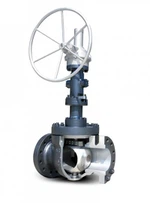

F316L Stainless Steel Forged Ball Valve
F316L Stainless Steel Forged Ball Valve
F316L stainless steel forged ball valves provide quarter-turn shut-off for industrial piping systems handling compatible process fluids. Material grade, pressure rating, seat selection and end connections should be specified according to the operating conditions and applicable design requirements.
Key Features
F316L Forged Body: Low-carbon, molybdenum-bearing stainless steel for applications requiring corrosion resistance and pressure-containing components.
Quarter-Turn Shut-Off: 90-degree operation for opening and closing the flow path.
Flexible Configurations: Floating or trunnion-mounted designs, full or reduced bore, subject to model availability.
Multiple Connection Options: Threaded, socket weld, butt weld or flanged ends, depending on the valve design.
Technical Specifications
|
Parameter |
Specification |
|
Valve Type |
Forged Stainless Steel Ball Valve |
|
Body Material |
ASTM A182 F316L |
|
Material Identification |
UNS S31603 |
|
Size Range |
1/2"–4" (DN15–DN100), subject to model |
|
Pressure Class |
Class 150, 300, 600, 800 or 1500, where available |
|
Body Construction |
One-piece, two-piece or three-piece, depending on design |
|
Ball Type |
Floating or trunnion-mounted |
|
Bore |
Full bore or reduced bore |
|
End Connections |
NPT/BSPT, SW, BW or flanged, where available |
|
Seat Materials |
PTFE, reinforced PTFE, PEEK or other specified options |
|
Operation |
Lever, gearbox, pneumatic or electric actuator |
|
Design & Testing Standards |
To be confirmed for the selected model |
Material & Seat Selection
F316L Stainless Steel: Suitable for selected corrosive services; compatibility depends on fluid composition, concentration and temperature.
Soft Seats: PTFE and reinforced PTFE may suit compatible media within specified operating limits. PEEK is an option for applications requiring different mechanical and thermal properties.
Service Compatibility: Chloride-containing fluids may cause pitting or stress corrosion cracking. Hydrochloric acid and certain sulfuric acid conditions require careful material evaluation.
Applications
Chemical Processing: Isolation of compatible chemicals, solvents and selected acid solutions.
Petrochemical Systems: On/off isolation in process and utility piping within specified service limits.
OEM Skid Equipment: Valve integration based on space, connection type, pressure rating and actuation requirements.
Industrial Fluid Handling: Selection according to media compatibility, operating conditions and required shut-off performance.
Quality Control & Documentation
Material Traceability: Heat-number identification and material test documentation, subject to the supply agreement.
Pressure & Seat Testing: Testing according to the applicable valve standard and agreed acceptance criteria.
Project Documentation: EN 10204 Type 3.1 material certificates, pressure test reports and certificates of conformity, where specified and available.
Special Requirements: API 607 / ISO 10497 fire-safe testing, NACE MR0175 / ISO 15156 requirements and third-party inspection must be confirmed for the exact valve model.
Customization & RFQ Requirements
For accurate valve selection and quotation, please provide:
Operating Conditions: Size, design pressure, operating pressure and temperature range.
Process Medium: Fluid composition, concentration, chloride content and presence of solids.
Valve Configuration: Bore, end connections, seat material and manual or actuated operation.
Project Requirements: Applicable standards, inspection documents, quantity and delivery destination.
Frequently Asked Questions
Q: What is the difference between F316 and F316L?
A: F316L has a maximum carbon content of 0.030%, compared with 0.08% for F316 under the relevant material specifications. Its lower carbon content reduces sensitization risk during welding.
Q: How does ASTM A182 F316L differ from ASTM A351 CF8M?
A: ASTM A182 F316L covers forged stainless steel components, while ASTM A351 CF8M covers cast austenitic stainless steel components. The manufacturing route and applicable material requirements differ.
Q: Can F316L handle chloride-containing fluids?
A: Suitability depends on chloride concentration, temperature, stress and other service conditions. A material compatibility review is recommended for demanding chloride applications.
Q: Can fire-safe valves be supplied?
A: Fire-safe options may be available for specific designs. Confirm the required API 607 or ISO 10497 test evidence and certification scope before ordering.
Q: What information is needed for a quotation?
A: Provide the valve size, pressure and temperature conditions, process medium, end connections, seat requirements, quantity and applicable standards.
Hot Tags: f316l stainless steel forged ball valve, China f316l stainless steel forged ball valve manufacturers, suppliers
Previous
No InformationYou Might Also Like
Send Inquiry