


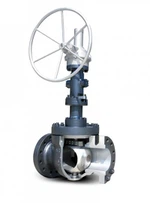

A105 Forged Carbon Steel Ball Valve
A105 Forged Carbon Steel Ball Valve
A105 forged carbon steel ball valves provide quarter-turn shut-off for industrial piping systems. Valve selection depends on pressure class, operating temperature, fluid compatibility, end connections and applicable design standards.
Key Features & Valve Design
ASTM A105 Forged Body: Carbon steel forging material for pressure-containing valve components, specified according to the applicable material and design requirements.
Floating or Trunnion-Mounted Ball: Ball configuration selected according to valve size, pressure differential and operating requirements.
Soft or Metal Seats: PTFE, RPTFE, PEEK or metal seats can be specified according to fluid compatibility, temperature and sealing requirements.
Manual or Automated Operation: Lever, gear, pneumatic or electric operation, subject to model availability and actuator requirements.
Technical Specifications
|
Parameter |
Specification / Options |
|
Product Type |
A105 Forged Carbon Steel Ball Valve |
|
Body Material |
ASTM A105/A105M, as specified |
|
Size Range |
DN15–DN300 (1/2–12 in), subject to model confirmation |
|
Pressure Class |
Class 150, 300, 600, 800, 900 and 1500, where available |
|
Ball Design |
Floating / Trunnion-Mounted |
|
Port Type |
Full Port / Reduced Port |
|
Body Configuration |
One-Piece / Two-Piece / Three-Piece, where available |
|
End Connections |
NPT / Socket Weld / Butt Weld / Flanged |
|
Seat Materials |
PTFE / RPTFE / PEEK / Metal |
|
Operation |
Lever / Gear / Pneumatic / Electric |
|
Design Standards |
API 608 / API 6D / ASME B16.34, as applicable |
|
Testing Standards |
API 598 / API 6D / EN 12266-1, as applicable |
Applications & Selection
Oil and Gas: Pipeline and process-line isolation where the selected valve meets the project pressure, temperature and media requirements.
Petrochemical Processing: On/off isolation for compatible hydrocarbons, process fluids and utility services.
Power and Industrial Utilities: Water, condensate and other compatible fluids within the valve's rated operating limits.
Operating Conditions: Specify fluid composition, normal and maximum pressure, temperature range, pressure differential and required leakage performance.
Materials, Sealing & Special Options
Body and Trim Materials: Confirm the body, ball, stem and other wetted materials against the fluid composition and service conditions.
Seat Selection: PTFE, RPTFE and PEEK have different temperature, pressure and compatibility limits. Select by grade and application rather than material name alone.
Special-Service Requirements: Fire-safe design, fugitive-emission qualification and sour-service requirements must be confirmed for the specific valve model.
Actuator Mounting: Specify the required actuator interface, operating torque, power supply or pneumatic conditions where applicable.
Quality Control & Documentation
Material Traceability: Request material certificates and heat-number traceability according to the purchase specification.
Pressure Testing: Specify the applicable shell and seat test standard, test conditions and acceptance criteria.
Inspection Records: Material certificates, pressure-test reports, dimensional inspection records and NDT reports can be requested according to the inspection scope.
Special Qualifications: Confirm applicable API 607, ISO 15848-1, NACE MR0175/ISO 15156 or CE/PED requirements against the actual product documentation.
RFQ Requirements
Provide the following details for technical review and quotation:
Valve Specifications: Size, quantity, pressure class, ball design and body configuration.
Piping Connections: NPT, socket weld, butt weld or flanged ends, including the required connection standard.
Operating Conditions: Fluid composition, operating pressure, minimum and maximum temperature, and pressure differential.
Documentation: Material certificates, testing records, special-service qualifications and third-party inspection requirements.
Frequently Asked Questions
Q: What does A105 mean in a forged steel ball valve?
A: ASTM A105/A105M specifies carbon steel forgings for piping components used in pressure systems. The ball, stem, seats and seals may use different materials.
Q: Is an A105 forged steel ball valve suitable for high-pressure service?
A: It can be suitable when the valve design, pressure class, connection type and pressure-temperature rating meet the specified operating conditions. Confirm the rating for the exact model.
Q: How do I choose between NPT and socket-weld ends?
A: NPT uses tapered pipe threads, while socket-weld ends use welded connections. Selection depends on pipe size, piping code, installation requirements and project specifications.
Q: How should I select PTFE or PEEK seats?
A: Consider the seat grade, fluid compatibility, temperature, pressure differential, operating torque and required leakage performance. Verify the manufacturer's limits for the selected valve.
Q: Can fire-safe or fugitive-emission requirements be specified?
A: Yes, where the valve model has the relevant design qualification or supporting test documentation. State the required standard and qualification scope in the RFQ.
Q: Which documents should be requested with an order?
A: Depending on project requirements, request material certificates, pressure-test reports, inspection records, applicable NDT reports and evidence of required special-service qualifications.
Hot Tags: a105 forged carbon steel ball valve, China a105 forged carbon steel ball valve manufacturers, suppliers
You Might Also Like
Send Inquiry