


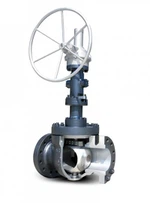

Pneumatic Flanged Trunnion Ball Valve
Pneumatic Flanged Trunnion Ball Valve
The Pneumatic Flanged Trunnion Ball Valve is used for automated on-off isolation in industrial pipeline systems. It combines a trunnion-supported ball, flanged end connections, and a pneumatic actuator selected according to valve operating torque and control requirements.
Product Overview
Trunnion-Mounted Ball: Upper and lower trunnion supports locate the ball within the valve body. This design is commonly used for larger valves and applications with higher differential pressures, subject to the selected valve design.
Flanged Connections: RF or RTJ facing options can be specified according to the applicable flange standard and pipeline interface requirements.
Pneumatic Actuation: Double-acting or spring-return actuators can be selected according to the required operating mode, available air pressure, and fail-position requirements.
Technical Specifications
|
Parameter |
Specification / Options |
|
Valve Type |
Pneumatic flanged trunnion-mounted ball valve |
|
Nominal Size |
DN/NPS range to be confirmed |
|
Pressure Rating |
ASME Class or PN, according to the selected design |
|
Body Materials |
ASTM A216 WCB, ASTM A352 LCC, ASTM A351 CF8M, or other specified grades, subject to availability |
|
Ball and Trim Materials |
Stainless steel or other application-specific materials |
|
Seat Materials |
PTFE, reinforced PTFE, PEEK, or metal seat, subject to design limits |
|
Bore Type |
Full bore or reduced bore, where available |
|
End Connection |
Flanged |
|
Flange Facing |
RF or RTJ, as specified |
|
Flange Standards |
ASME B16.5, ASME B16.47, or EN 1092-1, as applicable |
|
Valve Design Standards |
API 6D, ISO 14313, or ASME B16.34, subject to the selected design and applicable requirements |
|
Actuator Type |
Rack-and-pinion or scotch-yoke, subject to torque and configuration requirements |
|
Actuator Action |
Double-acting or spring-return |
|
Accessories |
Solenoid valve, limit switch box, positioner, and other specified accessories |
|
Operating Temperature |
To be confirmed for the selected body, seats, seals, pressure rating, and service conditions |
|
Inspection and Testing |
According to the applicable valve standard and agreed purchase specification |
Specification note: The available size range, pressure-temperature limits, material combinations, actuator configurations, and testing options must be confirmed for the selected model. Listed options are not necessarily available in every combination.
Design Features and Sealing Options
Trunnion-Supported Ball: The ball is supported by upper and lower trunnions. Operating torque and sealing performance depend on valve size, differential pressure, seat design, and operating conditions.
Soft or Metal Seats: Soft seats may be selected for specified shut-off requirements within their temperature and chemical-compatibility limits. Metal seats may be considered for certain high-temperature or abrasive services when supported by the valve design.
Specified Stem and Safety Features: Anti-blowout stem construction, anti-static features, fire-safe design, and low-emission packing can be specified where available. Applicable claims require supporting design documentation or test evidence.
Full-Bore or Reduced-Bore Configuration: Bore selection depends on pipeline requirements, flow-path requirements, and the available valve model.
Pneumatic Actuator Selection
The actuator must be sized against the valve's required operating torque throughout the operating cycle, using the minimum available air-supply pressure and the specified operating conditions.
|
Selection Factor |
Double-Acting |
Spring-Return |
|
Operating principle |
Air pressure drives both strokes |
Air drives one stroke; a spring drives the return stroke |
|
Loss of air supply |
Position depends on the system configuration and valve state |
Moves toward the specified spring-return position if the available spring torque is sufficient |
|
Typical requirement |
Pneumatic opening and closing |
A defined return direction following air loss |
|
Key sizing inputs |
Valve torque, minimum air pressure, and actuator output torque |
Valve torque, minimum air pressure, and spring output torque throughout the stroke |
Information required for actuator sizing
Valve Torque: Provide manufacturer torque data or the required torque values across the operating range.
Air Supply: Specify the minimum and maximum available instrument-air pressure.
Fail Position: State whether fail-open or fail-closed operation is required, where applicable.
Control Requirements: Specify solenoid voltage, control signal, limit switches, position feedback, and hazardous-area requirements.
Materials and Application Compatibility
Body and Trim: Select materials according to the process medium, pressure, temperature, corrosion conditions, and applicable material specifications.
Seats and Stem Seals: Verify chemical compatibility, temperature limits, differential pressure, and required leakage acceptance before finalizing the sealing configuration.
Sour-Service Requirements: Specify applicable NACE MR0175/ISO 15156 requirements where relevant. Material suitability must be verified against the actual grade, hardness, manufacturing condition, and service environment.
Special Service: Cryogenic, high-temperature, hydrogen, and abrasive applications require a separate review of materials, sealing arrangements, pressure-temperature limits, and actuator requirements.
Quality Control, Testing and Documentation
Pressure Testing: Specify shell and seat tests, test media, acceptance criteria, and applicable test procedures.
Material Traceability: EN 10204 Type 3.1 material test certificates can be requested where applicable to the supplied components and available within the agreed supply scope.
Inspection Records: Dimensional inspection reports, pressure-test records, and other agreed documentation can be included in the delivery package.
Certification and Special Testing: API 6D, PED, ATEX, SIL-related, fire-safe, and fugitive-emission requirements must be verified individually against the actual product configuration and supporting documentation.
Industrial Applications
Oil and Gas Pipelines: Automated isolation in pipeline systems, compressor stations, and process skids, subject to the specified operating conditions.
Petrochemical Processing: On-off isolation in hydrocarbon and chemical process lines where the selected materials and seals are compatible with the medium.
Industrial Process Systems: Pneumatically actuated isolation in industrial utilities and packaged equipment.
Special-Service Pipelines: Cryogenic, high-temperature, sour-gas, and hydrogen applications requiring specific material, sealing, and design verification.
Application suitability must be confirmed against the actual process conditions and project requirements.
Customization and RFQ Requirements
Provide the following information to support technical evaluation and quotation.
|
Required Information |
Details to Specify |
|
Valve Configuration |
DN/NPS, pressure rating, full or reduced bore, flange standard, facing, and design standard |
|
Operating Conditions |
Medium composition, normal and maximum pressure, maximum differential pressure, temperature range, and operating frequency |
|
Materials and Sealing |
Body and trim materials, seat type, sour-service requirements, and leakage acceptance criteria |
|
Pneumatic Actuation |
Double-acting or spring-return, fail position, minimum air pressure, solenoid voltage, control signal, and accessories |
|
Inspection and Documentation |
Testing standard, material certificates, third-party inspection, and project-specific requirements |
|
Order and Delivery |
Quantity, destination, and requested delivery date |
Frequently Asked Questions
Q: What is the difference between a trunnion ball valve and a floating ball valve?
A: A trunnion ball valve uses upper and lower supports to locate the ball. A floating ball valve allows the ball to move under fluid pressure to load the downstream seat. Selection depends on valve size, pressure conditions, differential pressure, and sealing requirements.
Q: How do I choose between double-acting and spring-return actuation?
A: Double-acting actuators use air pressure for both strokes. Spring-return actuators use a spring for one stroke and can provide a specified return direction following air loss. Selection requires the desired fail position, minimum air pressure, valve torque, and available actuator output torque.
Q: Can the valve handle corrosive media or sour gas?
A: Suitability depends on the medium composition, operating conditions, body and trim materials, hardness, and sealing materials. Specify the applicable corrosion or sour-service requirements for technical review.
Q: What leakage performance can the valve achieve?
A: Leakage acceptance depends on the valve design, seat configuration, test medium, test conditions, and applicable standard. Specify the required acceptance criteria in the RFQ. ISO 5208, API 598, and ANSI/FCI 70-2 requirements should not be treated as interchangeable; the applicable standard and acceptance criteria must be confirmed for the selected product.
Q: What documentation can be supplied?
A: Depending on the agreed supply scope, documentation may include material test certificates, dimensional inspection reports, shell and seat test records, and applicable compliance documents. Specify EN 10204 Type 3.1 certificates, third-party inspection, and project-specific documentation requirements when requesting a quotation.
Request a Quote
Specify Your Pneumatic Trunnion Ball Valve Requirements
Submit your valve size, pressure rating, process medium, operating temperature, maximum differential pressure, flange standard, and actuator requirements.
Include your valve datasheet, pipeline specification, or existing valve drawing if available. These details help establish the required configuration, material compatibility, actuator sizing, inspection scope, and quotation requirements.
Hot Tags: pneumatic flanged trunnion ball valve, China pneumatic flanged trunnion ball valve manufacturers, suppliers
You Might Also Like
Send Inquiry