


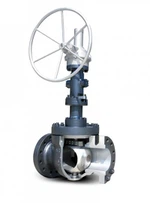

Double Acting Pneumatic Ball Valve
Double Acting Pneumatic Ball Valve
Double-Acting Pneumatic Operation: Compressed air drives the actuator in both directions to open and close the valve through a 90-degree rotation.
Automated Flow Isolation: Suitable for on-off control in industrial pipelines, process equipment, and OEM skid systems.
Configurable Materials: Body, ball, stem, and seat materials can be selected according to the medium, pressure, temperature, and chemical compatibility requirements.
Automation Integration: Optional solenoid valves, limit switch boxes, and air filter regulators support remote operation and valve position monitoring.
Key Features & Selection Factors
Actuator Torque Matching: Select the actuator based on valve torque requirements, maximum differential pressure, and available air supply pressure.
Seat & Material Compatibility: PTFE, RPTFE, PEEK, or metal seats may be available depending on the valve design and operating conditions.
Air Supply Requirements: Confirm the actuator's specified operating pressure and the site's clean, dry instrument-air supply.
Control & Feedback: Specify solenoid voltage, switching logic, limit switch feedback, enclosure protection, and hazardous-area requirements where applicable.
Double Acting vs. Spring Return
|
Selection Factor |
Double Acting |
Spring Return |
|
Opening & Closing |
Air pressure drives both directions |
Air drives one direction; spring drives the return stroke |
|
Loss of Air Supply |
No spring-driven fail-safe action |
Designed to return toward a specified fail position |
|
Typical Application |
Automated on-off control with available instrument air |
Applications requiring a defined fail-open or fail-closed response |
Technical Specifications
|
Parameter |
Options / Requirements |
|
Product Type |
Double Acting Pneumatic Ball Valve |
|
Valve Size |
Confirm available DN/NPS range |
|
Pressure Rating |
Specify PN or ASME Class |
|
Body Materials |
Stainless Steel, Carbon Steel, or other available materials |
|
Ball & Stem Materials |
Select according to medium and operating conditions |
|
Seat Materials |
PTFE, RPTFE, PEEK, or Metal Seat, subject to availability |
|
Valve Construction |
Two-Piece / Three-Piece; Floating / Trunnion-Mounted where available |
|
End Connections |
Flanged, Threaded, Socket Weld, or other available options |
|
Actuator Mounting |
ISO 5211 interface, where applicable |
|
Air Supply |
According to the selected actuator's operating range |
|
Control Accessories |
Solenoid Valve, Limit Switch Box, Air Filter Regulator |
|
Temperature Range |
Confirm for the complete valve and actuator configuration |
|
Design & Testing Standards |
Applicable standards confirmed according to valve design and order requirements |
Applications & Configuration Options
Water & Utility Systems: On-off isolation for industrial water treatment, cooling circuits, and utility piping, subject to material compatibility.
Chemical Processing: Automated isolation of compatible liquids and gases after reviewing corrosion resistance and seat suitability.
OEM Equipment & Skids: Pneumatic valve assemblies for dosing systems, packaged machinery, and automated process equipment.
Valve & Actuator Configuration: Select body construction, port design, end connections, actuator accessories, and manual override options according to installation requirements.
Quality Control & Testing
Material Verification: Material certificates and traceability records can be specified according to project requirements.
Dimensional Inspection: Check connection dimensions, stem geometry, mounting interfaces, and drawing-defined dimensions.
Pressure & Seat Leakage Testing: Testing can be specified according to the applicable valve standard and agreed acceptance criteria.
Functional Testing: Verify actuator operation, solenoid switching, and limit switch feedback when these accessories are supplied.
Customization & RFQ Requirements
Valve Specifications: Size, pressure class, end connection, body construction, and required materials.
Operating Conditions: Medium, working pressure, maximum differential pressure, and operating temperature.
Actuator & Controls: Available air pressure, operating frequency, solenoid voltage, feedback requirements, and enclosure protection.
Order & Documentation: Quantity, applicable standards, required certificates, delivery destination, and target delivery date.
Frequently Asked Questions
Q: How does a double-acting pneumatic ball valve work?
A: Compressed air drives the actuator to rotate the ball 90 degrees to open the valve. Air supplied to the opposite actuator port drives the movement in the other direction to close it.
Q: What happens if the air supply fails?
A: The actuator has no return spring to drive the valve to a predefined fail-open or fail-closed position. If a defined failure response is required, consider a spring-return actuator or another suitable safety arrangement.
Q: How is the pneumatic actuator sized?
A: Sizing depends on valve torque, maximum differential pressure, available air pressure, seat design, and operating conditions. The actuator output must meet the valve manufacturer's torque requirements throughout the operating cycle.
Q: Can the valve be used in hazardous areas?
A: Yes, if the selected valve assembly and accessories meet the applicable hazardous-area requirements. Confirm the required certification, zone, gas or dust group, and temperature class before ordering.
Hot Tags: double acting pneumatic ball valve, China double acting pneumatic ball valve manufacturers, suppliers
You Might Also Like
Send Inquiry