


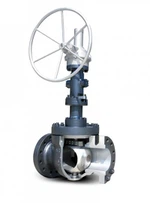

Pneumatic Single Acting Ball Valve
Pneumatic Single Acting Ball Valve
Quarter-Turn Operation: A pneumatic actuator rotates the ball 90 degrees to open or close the flow passage for automated isolation.
Spring-Return Design: Compressed air drives one stroke, while the internal spring provides the return stroke when actuator air pressure is lost.
Selectable Fail Position: Available configurations can include Fail-Close (FC) or Fail-Open (FO), depending on the actuator and valve assembly.
Key Features and Configuration
Fail-Safe Action: FC configurations return the valve to the closed position; FO configurations return it to the open position when actuator air is lost.
Actuator Torque Matching: Sizing considers valve operating torque, maximum differential pressure, minimum air supply pressure, and spring-return torque.
Material and Seat Options: Body, ball, stem, seats, and seals are selected according to fluid compatibility, pressure, and operating temperature.
Pneumatic Accessories: Optional solenoid valves, limit switch boxes, position indicators, and air filter regulators support automated control and position feedback.
Technical Specifications
|
Parameter |
Specification / Options |
|
Product Type |
Pneumatic single acting ball valve |
|
Actuator Type |
Spring-return rack-and-pinion or scotch-yoke, subject to model availability |
|
Operating Principle |
Pneumatic drive with spring return |
|
Fail Position |
Fail-Close (FC) / Fail-Open (FO) |
|
Nominal Size |
Confirm by valve model |
|
Body Material |
Stainless steel, carbon steel, or other available grades |
|
Ball and Stem |
Stainless steel or other compatible materials |
|
Seat Materials |
PTFE, RPTFE, PEEK, or other model-dependent options |
|
Pressure Rating |
Confirm by valve design and pressure class |
|
Operating Temperature |
Depends on body, seat, seals, and actuator configuration |
|
End Connections |
Flanged, threaded, welded, or other available options |
|
Air Supply Pressure |
Confirm against the selected actuator specifications |
|
Control Accessories |
Solenoid valve, limit switch box, position indicator, filter regulator |
|
Testing |
Applicable shell, seat leakage, and functional tests as specified |
|
Documentation |
Dimensional drawings, material certificates, and inspection reports as agreed |
Applications and Engineering Selection
Water Treatment: Automated isolation in water supply, filtration, and treatment systems, subject to fluid compatibility.
Chemical Processing: On-off control for compatible process media after evaluating corrosion, pressure, and temperature.
OEM Equipment and Skids: Pneumatic valve assemblies for automated machinery and industrial process packages.
Tank and Transfer Systems: Automated isolation where a defined valve position is required following loss of actuator air.
Key Selection Checks
- Process Conditions: Specify fluid composition, operating temperature, line pressure, and maximum differential pressure.
- Fail Position: Determine whether the valve must open or close when pneumatic pressure is lost.
- Air Supply: Provide the minimum available air pressure for actuator sizing.
- Installation Interface: Confirm valve mounting dimensions, actuator compatibility, control voltage, and accessory enclosure requirements.
Manufacturing and Quality Control
Assembly Verification: Check valve-actuator compatibility, mounting alignment, coupling engagement, and travel-stop settings according to the applicable procedure.
Functional Testing: Verify opening and closing action and the specified fail position.
Pressure and Leakage Testing: Perform the agreed tests against the applicable valve standard and acceptance criteria.
Material Traceability: Material certificates and inspection records can be supplied according to the agreed order requirements.
Customization and RFQ Requirements
Valve Configuration: Specify size, body material, seat material, pressure rating, and end connection.
Actuator Requirements: State the required fail position, minimum air pressure, operating frequency, and maximum differential pressure.
Control Accessories: Identify solenoid voltage, control signal, position feedback, enclosure rating, and hazardous-area requirements.
Quality and Delivery: Confirm applicable standards, inspection scope, material documentation, order quantity, and target delivery date.
Frequently Asked Questions
Q: What is a pneumatic single acting ball valve?
A: It combines a ball valve with a spring-return pneumatic actuator. Air pressure drives one stroke, and the spring returns the valve to its configured position when actuator air is lost.
Q: What is the difference between Fail-Close and Fail-Open?
A: Fail-Close returns the valve to the closed position after air failure, while Fail-Open returns it to the open position. The required action depends on the process safety requirements and actuator configuration.
Q: How do I select the correct actuator size?
A: Provide the valve operating torque, maximum differential pressure, minimum available air pressure, and required fail position. Both air-driven and spring-return torque must meet the valve's operating requirements.
Q: Can the assembly be used in hazardous areas?
A: Use only configurations with the approvals required for the intended hazardous-area classification. Verify the certificates and ratings of the actuator, solenoid valve, limit switch enclosure, and other relevant components.
Q: Can the valve and actuator assembly be customized?
A: Options may include valve materials, seat materials, actuator sizing, fail position, solenoid valves, limit switches, and mounting accessories. Availability and compatibility should be confirmed for each application.
Hot Tags: pneumatic single acting ball valve, China pneumatic single acting ball valve manufacturers, suppliers
Next
No InformationYou Might Also Like
Send Inquiry