


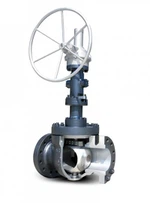

Three Piece Flanged Ball Valve
Three Piece Flanged Ball Valve
Three piece flanged ball valves provide quarter-turn flow isolation for industrial piping systems. The flanged connections simplify integration into compatible pipelines, while the three-piece body design can facilitate access to internal components on serviceable models. Material, seat, pressure rating, and operating options should be selected according to the process conditions.
Key Features
Three-Piece Body Design
Allows access to internal components on serviceable models. Maintenance procedures depend on the specific body construction and installation clearance.
Flanged End Connections
Available configurations can be matched to the required flange standard, pressure rating, facing, and pipeline dimensions.
Multiple Material and Seat Options
Body, ball, stem, and seat materials can be selected according to fluid compatibility, operating temperature, and pressure requirements.
Manual and Automated Operation
Lever, gear, pneumatic, or electric operation may be available depending on valve size, torque requirements, and mounting configuration.
Technical Specifications
|
Parameter |
Specification / Options |
|
Valve Type |
Three Piece Flanged Ball Valve |
|
Nominal Size |
Confirm available DN/NPS range |
|
Pressure Rating |
ASME Class or PN rating, subject to model |
|
Body Materials |
Stainless steel, carbon steel, or specified alloys |
|
Ball & Stem Materials |
Selected according to service conditions |
|
Seat Materials |
PTFE, reinforced PTFE, PEEK, or metal seats, subject to availability |
|
Flange Standards |
ASME B16.5, EN 1092-1, or other confirmed standards |
|
Flange Facing |
RF, FF, or RTJ, where supported |
|
Design Standard |
Confirm applicable valve design standard |
|
Testing |
Applicable shell and seat testing requirements |
|
Operation |
Lever, gear, pneumatic, or electric |
Materials and Sealing Options
Body and Trim Materials
Stainless steel, carbon steel, and corrosion-resistant alloys may be specified according to the process medium and operating environment.
Soft Seats
PTFE and reinforced PTFE seats may suit compatible fluids requiring tight shut-off. Allowable pressure and temperature depend on the valve design and seat grade.
Metal Seats
May be considered for selected high-temperature or abrasive applications. Confirm wear conditions, leakage requirements, and the manufacturer's operating limits.
Special Service Requirements
Fire-safe, fugitive-emission, and sour-service configurations require confirmation of the applicable design, materials, qualification, and documentation.
Applications
Chemical and Petrochemical Processing
Material and seal selection should account for chemical compatibility, concentration, pressure, and temperature.
Oil and Gas Piping
Specify the required pressure class, design standard, and any applicable fire-safe or sour-service requirements.
Water Treatment and Industrial Utilities
Select the valve according to fluid characteristics, pipeline specifications, and shut-off requirements.
High-Temperature or Abrasive Service
Evaluate metal-seated options where appropriate, subject to verified operating limits and leakage criteria.
Quality Control and Documentation
Pressure Testing
Confirm shell and seat testing procedures, acceptance criteria, and applicable standards for the selected valve.
Material Traceability
Material test certificates, including EN 10204 Type 3.1 where specified, can be requested subject to supply and documentation scope.
Dimensional Verification
Flange dimensions, face-to-face length, and connection interfaces should be checked against approved drawings.
Project Documentation
Request dimensional drawings, inspection records, and applicable compliance documents according to project requirements.
Customization and RFQ Requirements
Valve Configuration
Provide nominal size, pressure rating, port design, flange standard, and facing requirements.
Operating Conditions
Specify the process medium, operating pressure, design pressure, and temperature range.
Materials and Actuation
Identify body, ball, stem, seat, and packing requirements, along with manual or automated operation needs.
Inspection and Delivery
Include required testing standards, certificates, inspection scope, quantity, destination, and target delivery date.
Frequently Asked Questions
Q: Can a three-piece flanged ball valve be serviced without removing the end flanges?
A: Some designs allow internal components to be accessed while the end connections remain installed. Confirm the maintenance procedure and clearance requirements for the selected model. The line must be isolated, depressurized, and drained before servicing.
Q: How do I choose between soft-seated and metal-seated valves?
A: Consider the medium, temperature, pressure, solids content, and required leakage criteria. The appropriate seat material must be verified against the manufacturer's operating limits.
Q: Are pneumatic and electric actuators available?
A: Actuator options depend on valve size, operating torque, mounting interface, and control requirements. Specify the required power or air supply, control signals, and accessories.
Q: Can the valve meet fire-safe, fugitive-emission, or sour-service requirements?
A: These requirements depend on the exact valve configuration and applicable qualification. Specify the required standard and request supporting test reports, certificates, and material documentation before approval.
Hot Tags: three piece flanged ball valve, China three piece flanged ball valve manufacturers, suppliers
You Might Also Like
Send Inquiry