


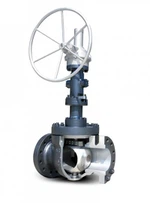

High Temperature Wafer Ball Valve
High Temperature Wafer Ball Valve
The High Temperature Wafer Ball Valve is designed for quarter-turn on-off flow control in industrial piping systems where installation space is limited and operating temperatures are elevated. Seat materials, body materials, stem packing, and pressure ratings should be selected according to the actual operating conditions.
Product Overview
Compact Installation: Wafer-style construction supports space-constrained piping layouts and equipment skids.
High-Temperature Configurations: Available seat and packing options can be selected according to the specified operating temperature and pressure.
Manual or Automated Operation: Options may include a lever, gear operator, pneumatic actuator, or electric actuator, subject to valve design compatibility.
Technical Specifications
|
Parameter |
Specifications / Options |
|
Nominal Size |
DN15-DN200 (NPS 1/2-8) |
|
Pressure Rating |
PN10-PN40 / ASME Class 150-300, subject to design verification |
|
Operating Temperature |
Proposed range: -29°C to +400°C; confirm limits for each configuration |
|
Body Materials |
Carbon steel WCB; stainless steel CF8, CF8M, CF3M; alloy steel options subject to availability |
|
Ball Materials |
Stainless steel 304 / 316; hard-facing options subject to specification |
|
Seat Materials |
PEEK, carbon-filled PTFE, or metal-to-metal |
|
Stem Packing |
Flexible graphite or other specified high-temperature packing |
|
Connection |
Wafer-style installation; confirm flange compatibility and face-to-face dimensions |
|
Actuation |
Lever, gear operator, pneumatic, or electric, subject to configuration |
|
Mounting Interface |
ISO 5211 mounting interface, if provided on the selected model |
|
Inspection |
Shell and seat tests according to the confirmed applicable standard |
Seat Selection Guide
PEEK Seats: Consider for applications requiring soft-seat shut-off at elevated temperatures. Confirm the specific grade, pressure limit, and media compatibility.
Carbon-Filled PTFE Seats: Consider where chemical compatibility and soft-seat sealing are priorities. Verify the allowable temperature and pressure for the selected compound.
Metal-to-Metal Seats: Consider for higher-temperature service or applications involving abrasive particles, subject to material, coating, and leakage requirements.
Applications
Thermal Oil Systems: For shut-off service in heat-transfer fluid circuits, subject to fluid compatibility and temperature-pressure limits.
Industrial Heating Equipment: For specified hot-fluid or process-heating lines where the valve rating matches the operating conditions.
Hot Gas and Process Systems: For suitable gas or exhaust applications after checking temperature, pressure, corrosion, and sealing requirements.
Manufacturing, Quality Control and Documentation
Pressure and Seat Testing: Shell and seat leakage tests can be specified according to the applicable valve standard and purchase requirements.
Material Documentation: Material Test Reports may be requested for specified pressure-containing components, subject to the agreed supply scope.
Dimensional and Configuration Checks: Confirm key dimensions, material grades, seat configuration, and actuator interface against the approved datasheet.
Third-Party Inspection: Inspection by agencies such as SGS, TÜV, or Bureau Veritas may be arranged if agreed before order confirmation.
RFQ Requirements
To evaluate the correct valve configuration, please provide:
Size and Pressure Rating: Nominal size, flange standard, pressure class, and face-to-face requirements.
Process Conditions: Medium, normal and maximum temperature, operating pressure, and maximum differential pressure.
Materials and Sealing: Preferred body material, seat type, stem packing, and required leakage criteria.
Operation and Documentation: Manual or actuated operation, control requirements, inspection scope, and material certificates.
Frequently Asked Questions
Q: What is the maximum operating temperature?
A: The maximum temperature depends on the seat material, packing, body design, pressure, and process medium. The proposed upper limit of 400°C must be verified for the exact configuration before selection.
Q: Should I choose a soft seat or a metal seat?
A: Soft seats may suit applications requiring tighter shut-off within their rated conditions. Metal seats may be considered for higher temperatures or abrasive service. The final choice depends on leakage requirements, medium, pressure, and temperature.
Q: Is this valve suitable for thermal oil service?
A: It may be suitable when the body, seats, packing, and pressure rating are compatible with the thermal oil and the specified operating conditions. Provide the normal and peak temperatures and operating pressure for technical review.
Q: Can a pneumatic or electric actuator be installed?
A: Actuation options depend on the valve's mounting interface, stem design, operating torque, and required fail position. Confirm actuator sizing and interface compatibility for the selected model.
Q: What inspection documents are available?
A: Possible documents include material test reports, pressure-test records, dimensional inspection reports, and agreed third-party inspection reports. Availability and scope should be confirmed in the purchase specification.
Hot Tags: high temperature wafer ball valve, China high temperature wafer ball valve manufacturers, suppliers
Previous
No InformationYou Might Also Like
Send Inquiry