


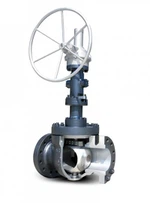

Short Face-to-Face Wafer Ball Valve
Compact Wafer Design: Installs between compatible pipeline flanges, reducing the valve's face-to-face space requirement compared with longer valve designs.
Quarter-Turn Operation: Provides on-off flow control for industrial piping systems.
Flexible Configuration: Available with different body materials, seat options, pressure ratings, and manual or automated operation, subject to model availability.
Key Design Features
Short Face-to-Face Construction: Suitable for compact process lines, modular skids, and equipment packages where installation space is limited.
ISO 5211 Mounting Interface: Supports pneumatic or electric actuator integration when the mounting dimensions, stem connection, and operating torque are compatible.
Stem Safety Features: Anti-blowout stem construction and anti-static provisions are available depending on the selected design.
Seat Options: PTFE, reinforced PTFE, PEEK, and metal seats can be selected according to the operating temperature, pressure, and process media.
Technical Specifications
|
Parameter |
Specification / Options |
|
Valve Type |
Short Face-to-Face Wafer Ball Valve |
|
Nominal Size |
DN15-DN200 (NPS 1/2-8) |
|
Pressure Rating |
ASME Class 150 / 300; PN10 / 16 / 25 / 40, subject to model design |
|
Body Materials |
WCB, CF8 (304 SS), CF8M (316 SS), Duplex 2205 / 2507 |
|
Ball and Stem Materials |
304 SS, 316 SS, 316L SS, 17-4PH, subject to configuration |
|
Seat Materials |
PTFE, RPTFE, PEEK, Devlon, metal seat options |
|
Face-to-Face Dimension |
Manufacturer-specific or applicable standard series; confirm by approved drawing |
|
Flange Compatibility |
ASME B16.5, EN 1092-1, or JIS B2220 configurations, subject to design |
|
Operating Temperature |
Depends on seat, seals, pressure rating, and media; confirm for each configuration |
|
Operation |
Lever, gear operator, pneumatic actuator, or electric actuator |
|
Design Standards |
ISO 17292, ASME B16.34, or other applicable standards, subject to model compliance |
|
Inspection and Testing |
API 598, ISO 5208, or EN 12266-1, as specified for the order |
Applications
Modular Skid Systems: Fuel gas packages, chemical dosing skids, and water treatment equipment, subject to media compatibility.
OEM Equipment: Compact process machinery, cooling circuits, and industrial utility systems.
Industrial Process Piping: Chemical, oil and gas, and general utility lines where the selected materials and ratings meet operating requirements.
Retrofit Projects: Replacement of existing valves where the available installation length, flange arrangement, and operating conditions are compatible.
Materials and Operating Conditions
Body Material Selection: Carbon steel, stainless steel, and duplex stainless steel options can be considered based on corrosion conditions, design pressure, and temperature.
Seat Selection: Soft seats are commonly used for suitable clean-fluid services; PEEK or metal seats may be considered for more demanding temperature or wear conditions when supported by the valve design.
Pressure-Temperature Verification: Allowable operating conditions depend on the complete valve configuration, not just the body material or nominal pressure class.
Quality Control and Documentation
Pressure and Seat Testing: Testing can be specified to API 598, ISO 5208, or EN 12266-1, with the applicable procedure and acceptance criteria confirmed for the order.
Material Documentation: EN 10204 Type 3.1 material inspection certificates can be requested for specified materials and components, subject to supply scope.
Dimensional Inspection: Critical dimensions, flange interfaces, and actuator mounting dimensions should be checked against approved drawings.
Additional Documentation: PMI reports, inspection records, and applicable conformity or fire-test documents may be available depending on the model and certification status.
Customization and RFQ Requirements
Size and Pressure Rating: DN/NPS, ASME Class or PN rating, and required face-to-face dimension.
Operating Conditions: Media, normal and maximum pressure, operating temperature, and any solids or abrasive content.
Materials and Connections: Body, ball, stem, and seat materials, plus the pipeline flange standard.
Operation and Documentation: Manual or automated operation, actuator requirements, applicable standards, inspection documents, quantity, and delivery destination.
Frequently Asked Questions
Q: What is the main advantage of a short face-to-face wafer ball valve?
A: Its compact axial dimension can help reduce installation space compared with longer valve designs. Actual space and weight savings depend on the valve size and the reference design.
Q: Can the valve be fitted with a pneumatic or electric actuator?
A: Yes, where the selected model includes a compatible ISO 5211 mounting interface. Confirm the mounting size, stem dimensions, required operating torque, and actuator specifications before ordering.
Q: How should I choose between soft and metal seats?
A: PTFE and reinforced PTFE are commonly considered for compatible fluids and moderate operating temperatures. PEEK and metal seats may suit other conditions, but the final selection must account for media compatibility, pressure, temperature, solids, and the required leakage acceptance criteria.
Q: Are face-to-face dimensions interchangeable between manufacturers?
A: Not necessarily. Confirm the exact dimension, applicable standard or series, flange arrangement, and installation clearances using the approved dimensional drawing.
Q: What inspection documents can be supplied?
A: Depending on the order and product configuration, documentation may include pressure-test records, specified EN 10204 Type 3.1 material certificates, dimensional inspection reports, and applicable conformity documents.
Hot Tags: short face-to-face wafer ball valve, China short face-to-face wafer ball valve manufacturers, suppliers
You Might Also Like
Send Inquiry